
(Interview begins at 1:05)
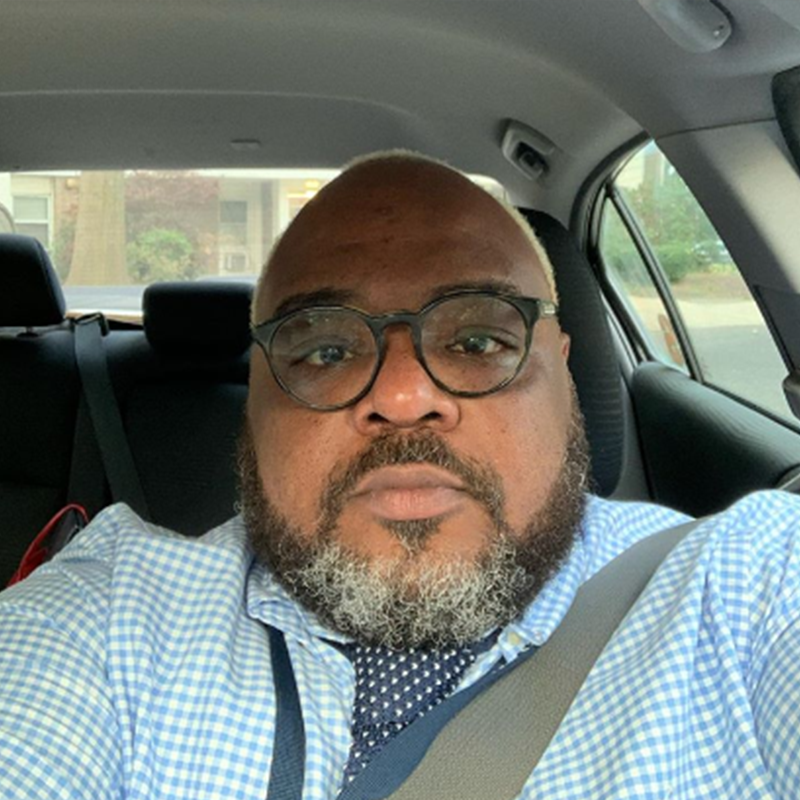
Interviewee Name: Floyd Cammock, Springfield, MA
Date of Interview: 10/19/20, Via Zoom
Interviewer: Clayton Arble, Hampshire College, Amherst, MA
Subject: Teaching During The COVID-19 Pandemic
CLAY: My interviewee should be joining this call any second. If I end up learning how to, I’ll probably crop this part out of the official interview. If I don’t, then, uh–oop, there he is–
Clay: What’s up, Floyd?
FLOYD: What’s going on, sir!
Clay: This is cool, alright, it’s finally happening. Had some hiccups, but we’re rockin’ and rollin’ now.
FLOYD: That’s alright there. What’s up?
CLAY: Nothing much. I chose you for this interview because you’re a history teacher, so I figured you’d have a nice, articulate perspective on being a teacher this year. Everything’s been crazy, but you of all people would know the importance of talking about, in real time, what it’s been like being alive in 2020. Before we get the interview started, there’s some rigamarole I have to go through, some scripting I have to fulfill.
FLOYD: Alrighty.
CLAY: It is currently the 14th of October in the year 2020. I’m in Amherst, Massachusetts, conducting this interview over Zoom. This interview is sponsored by Hampshire College, and is part of the First Year Seminar, Pandemics. Now Floyd, I have four initial questions I have to ask you.
FLOYD: K.
CLAY: Can you please state your full name, with spelling?
FLOYD: Floyd Clarence Cammock. F-L-O-Y-D C-L-A-R-E-N-C-E C-A-M-M-O-C-K
CLAY: Alright, thank you. What year were you born?
FLOYD: 1976.
CLAY: And where are you from?
FLOYD: I’m originally from Connecticut.
CLAY: And where are you currently residing?
FLOYD: I currently reside in Springfield.
CLAY: Do you give me formal permission to include this interview, both audio and visual, in the Hampshire College COVID-19 Oral History Archive?
FLOYD: Yes, yes, I do.
CLAY: Alright, cool, now we can launch.
FLOYD: Alright.
CLAY: So, my questions are in chronological order. They start right around when the pandemic hit.
FLOYD: Mhmmm.
CLAY: I’m interested in knowing how you felt, as a teacher, when COVID hit in March and all the schools started switching to remote instruction indefinitely?
FLOYD: Well, it was really weird because at first, we were supposed to have a PD, and then the PD was cancelled. It was a Friday, I think it was March 12, and over the weekend we got an email saying schools were closed. So at this point, we were kind of confused on what to do, so we had a slew of Zoom meetings, and we were like, Ok, we have to go online. But one of the issues was that, for the first six weeks or so, the state kept changing the parameters of what we were supposed to be doing. Our first directive was literally like, “We’re going to try to get all the kids access to the Internet or a computer,” and as a teacher we were told just to go back and review, don’t introduce any new material.” And about two weeks after that, we were told that we could and we should start actual teaching again.
CLAY: Mhmm.
FLOYD: So that we made–well, for me, I already had all my kids in Google Classroom as a supplement so that, if you’re out, I had everything posted online, just as practice. But now that we were…it was weird because we were told to teach a lesson and record it, put it out there and then two days a week, teach that same lesson that we’d recorded already. So it was very strange.
CLAY: Just for reference, what is a ‘PD’?
FLOYD: ‘PD’ stands for ‘Professional Development Day’. The usually bring in someone from the outside to help teachers improve or sharpen our schools. It’s required for pretty much every teacher throughout the year. There are built-in professional development days.
CLAY: I’m also wondering how cooperative and available your students were with online instruction?
FLOYD: Well…that was a task. What happened was that the seniors and juniors heard some weird Internet rumor that school was cancelled for the entire year, so a lot of them didn’t show up. So we had this massive effort where we, as teachers, called everyone that we taught. So each student got about seven phone calls from all their teachers that this is the time for class and you need to do your work, you will be graded. It felt like the beginning of the year, so it was kind of reminiscent of the first week of school where you’re going through all the procedures and all that kind of stuff, so it put us back maybe a half a year, educationally and content-wise. Plus, the kids weren’t returning phone calls, so it was a really monumental effort just to get everyone the things they needed, just to get the kids back into a groove, and that was really achieved through our advisories. Advisories, for people who don’t know, are like homerooms but longer and more involved. So we got our advisees back, and if we had a good relationship, they started going back to class.
CLAY: That leads into my next question. What were some of the routines once everything settled into a new groove–once everyone was having classes on Zoom?
FLOYD: I can’t speak for everyone, but I usually prepared a daily–well, we had class twice a week–but I’d prepare a slide presentation for everything I was going to talk about. I recorded my lessons, and there was a do-now. We’d go over the do-now like we’d do in class, but virtually, then I’d share the presentation. We would have, literally class. It was more of a mini-lesson. We went over the main points. Usually there was an assignment, and I also made myself available about three times a week for an hour each for office hours, so they had access to the material. It was really strange because kids who did work in the classroom didn’t like the online, and kids who didn’t do much work in the classroom thrived online. It was a really weird situation for everyone involved.
CLAY: That’s interesting! As an aside, it’d be cool, maybe after the pandemic, to explore the idea of hybrid classes–doing stuff on Zoom as well as in person.
FLOYD: I think what we learned is that our students are very social, so the online thing does not work for about seventy-five percent. There is that twenty-five percent that really thrive because they can do the work, and they don’t have to talk. So they like it, but the majority of the students want to go back to school. We miss our friends and we miss being in class, and we miss the teachers. But I’m sure there are external factors that make them want to come back.
CLAY: This next question has to do more with your colleagues. Did you and/or your colleagues try to see your students in person sometimes, knowing that online classes were, as you said, not ideal? I’m wondering if you guys brainstormed ideas for hybrid courses.
FLOYD: We tried, but due to state directive–and I just have to make this crystal-clear: everything that we did was directed by the Governor’s office, who, in turn, told the Director of Education, the DESI director. So all our efforts and everything we did came from them. So they had a directive every other week. We went from review, to restart, to doing a little bit of both, or you could choose what you want. As for my colleagues and myself, it felt like every Monday you would open up your email and there was a different directive. So you had a good two weeks and all of a sudden, it completely changed on you. At first, attendance counted, then it didn’t, so we’d grade the kids by the work they turned in. It was all over the place; there wasn’t anything solid.
Now that we’re like this in the fall, it’s better a little bit, but I wish there was something more concrete. The state asked for three plans: one for fully opening, two for hybrid, and three for completely remote. For me, personally, I would have gone with the hybrid model, because I think that socialization is really key for academics because you can’t really judge or gauge because, as a practice, I don’t ask students to turn their cameras on because I find that, for some students, it is intrusive, and maybe they don’t want to show you what’s going on at home or where they live. So I really respect that, but I do ask you to turn your mic on when we’re having a conversation. But the state really dropped the ball, and it went from directives to “Well, you as a district can decide what you want to do.”
Everyone was all over the place, so, we tried to streamline our teaching, so tried to make it the way it was in class, so we all produced a video and presentation and made sure each student got a copy over Google Classroom. And we made it so that we only posted one assignment per week. So the kids were only doing like seven assignments during the week, so we made it to a point where it was more manageable in the spring, as opposed to the fall. I think the students are overwhelmed when they see all those emails–but that’s just my take, I’m sorry.
CLAY: No yeah, yeah. Everything you’re saying is very much relevant. This is a little time capsule, there’s no such thing as digression or anything, all this is very intriguing. Now, I’d like to know more about the end of the school year. What kind of emotions you were going through, what kinds of emotions were expressed by your students and colleagues as the year ended in quarantine. I mean, what was it like to graduate a class in COVID times?
FLOYD: Emotionally, we were really depressed, especially for the seniors, and I think that’s where most of our thoughts went, because we all took a minute to reflect like, Wow, senior year, you have the option of going or not going to all these events, and it would be our choice, and now the choice is taken away from you. I felt happy and sad at graduation, seeing these kids I worked with for years where all they could do was get out of their car in their mask and cap and gown, take a picture, get their diploma and leave. I felt really bad that they missed out on such an important moment in life, where it’s symbolically that crossover where you’ve worked your 12 years and here you go, you’re now an adult, you can go wherever you want, you’re done.
For me, personally, their parents were robbed of these precious moments. They couldn’t see their son or daughter all dressed up for prom, walking across the stage and shaking the principal’s hand with everybody clapping. You had the teachers sitting there six feet apart cheering you when you came to pick up your diploma from a car. That part was really hard. And abruptly ending in March, we didn’t have our proper goodbyes with our students. And I’ll be honest, there were a few classes where myself and a lot of the students, we shed tears because we missed each other so much, and even though we saw each other on a weekly basis, it wasn’t the same. There is that human need for personal contact, to be speaking with somebody when they’re there. The emotions and the things you want to say–your non-verbal communication skills–don’t work very well online. It was really sad all throughout, because the seniors lost everything, and you got to this point with the other students where you had this great relationship, but everything just abruptly ended.
Online couldn’t replace the in-person thing. I don’t know what the word is, but in-person learning is just really important, and we were all robbed of that. I think, as professionals, we are affected, but we don’t necessarily tell the students. I’ve shared my disappointment and sadness that this had to happen, especially for the seniors, because they were in limbo, not knowing if they were ever going to come back to that building. There’s no sense of community. There’s no laughter, the hallways are quiet, it just feels like a wake, for lack of a better term. You go into your classroom every day, and pretty much you’re in the room by yourself all day.
We share lunch together, but it’s taken a toll on me because I’m a very social person. I do twice as much work online, but it just doesn’t feel like I’m making a difference being in the building, because education isn’t just about the content, it’s about helping the student grow as a person, as a human, and when you’re doing the whole online thing, you take out the most important element of teaching. You can’t build genuine relationships over the Internet.
CLAY: Yeah, and to add my own detail, it’s funny, that contact over zoom or any online interfacing is just–that’s not how it works, you’re looking at the screen instead of the camera, so there’s literally no eye contact anymore, so I definitely understand how doing stuff online is a lot less, you know, human.
CLAY: But moving now to the summer, between school years, I want to know how the pandemic affected your planning for classes over the summer. I don’t know if you guys had a timeline of the pandemic knowing that classes next year would be all remote?
FLOYD: During the summer, from the beginning towards the end, we were all over the place. The three plans were still in effect. But what happened this summer was that it was decided for summer school was that the teachers who taught it would go into the building and teach from the building, so I think they were the guinea pigs. I taught summer school, and I had fun being there with my colleagues, I was there with Cat and Camilla and a couple other people there. When we had lunch … we had a 40-minute lunch, so we could actually sit outside and socially distance, and actually talk, and have a good time, and that was the best part of it because we got to socialize, but as far as teaching was concerned, it was like the spring, where we got to see the kids, but it didn’t feel the same.
You try to make it as normal as possible, but it really puts it into perspective–how important that socialization piece really is in education. I think that’s the key piece. If you can be a people person, the other stuff can come naturally. We can always work on the content, that’s neither here nor there, but when you leave you should be able to be a good human being. You might not remember the Battle of Gettysburg, but please and thank you’s, if you got nothing nice to say don’t say it–things like that. And that’s probably worse for younger students. I teach high school. Some of them are mature, but there are the others who are really not doing well with this whole online thing.
CLAY: Just for reference, what grades do you teach?
FLOYD: I teach 10th and 11th grade, U.S. History 2, and an Honors class.
CLAY: Yeah, you’re dealing with kids who are in the middle of their high school experience. There must be a whole landscape here–kids entering high school in this new work, kids exiting it.
FLOYD: It’s also a weird thing, because normally there is this kind of growth period. And I think the sophomores are robbed of that growth period, where, say we go back in January of 2021, it’s going to be a process to re-teach social norms again. And I think the procedures for the classroom are easy, but trying to re-teach social norms is going to be a difficult thing for every teacher, because you’re going to have to factor in that the kids are not in class, they’re in their homes, or outside in their bedrooms, they can do whatever they want. That’s going to be a difficult thing when we re-open.
CLAY: Now, to go more into the beginning of this year, I’d like to know how you felt the first week of class this school year, with it being online. The feelings you were entering the school year with, and the emotions expressed by your colleagues and classes.
FLOYD: A number of my colleagues would have preferred to work from home. They didn’t understand the concept of being in the building teaching when they could do the same thing from home. But for me, what I realized in summer school was that it is a pain in the butt to come to the building, but when the situation arises, it’s good to knock on the person’s door and get that situation resolved instead of getting a zoom link to talk to someone when you don’t know what they’re doing, or if you’re trying to teach and there’s a million emails. But honestly, I was prepared for it with the spring and summer, because I’d gotten to the point where I loved teaching. And if this was the only way I could see my kids, I’m OK with it. I don’t like it, but I’ll deal with it.
The first week was weird because you’re trying to make norms for being online, like, “If you have a question, say it in the chat; no foul language; no insults.” And that was pretty much it, teaching the kids how to navigate google classroom. The first week was mostly Google Classroom tutorials. It wasn’t very fun. I saw my colleagues at the beginning of the day, lunch, and the end of the day, but beyond that we were just in our rooms. I guess I know how the kids feel, because during your prep period, you’d take a walk in the halls to see who was there to say hi, but this online stuff doesn’t allow for any of that. You’re on an island by yourself with a computer. That’s the best way I can describe it.
CLAY: I’m wondering how teaching online affected the kind of work you gave and that you’re giving your students, and also the kind of work they’re handing in?
FLOYD: Personally, I’ve used a lot of the stuff I used in class, because it’s easy to put it into Google Classroom and make a copy for all the kids, so that’s neither here nor there, because I would put everything on Google Classroom anyway. I didn’t use it in class. As I said, it was a supplement, but this year, you realize that some kids aren’t doing the work, so what you get sometimes, especially for classwork, is either they’re going to cut and paste the reading you gave them, or if it’s something you asked them to do on their own to put in their own words. What I find sometimes is that kids will cut and paste and use them as their answer, so it’s like, “Yes, this is a beautiful, well thought-out answer, but it’s not yours, I would rather have your words.” Some kids think they’re slick, cutting and pasting and thinking they’re putting one over on teachers. So the quality of work is a twofold thing. It’s great when all these kids are bringing in all these different aspects to a question, but you know who just googled the question and who copies the answer. Sometimes they’ll just pick the first thing that popped up and it has nothing to do with the question. So we have to do a lot of plagiarism checks. So that’s another thing.
CLAY: Going back to the idea of hybrid courses: is the idea of hybrid courses floated among your colleagues? Are you guys brainstorming ways to do them this semester? Have you yet?
FLOYD: We would have to wait for a number of things. The Department of Education would have to give the green light for our district to go hybrid or back fully, but from what we’ve been told, we’re in this virtual mode until at least Thanksgiving, or there’s more progress made on a vaccine or something. We were hoping there would be a vaccine by the end of the year, so we could at least have the second half of the year. But the way things are looking, we might still be in virtual mode next year. We did talk about hybrid, but the logistics would be kind of coo coo. What we would be asking for would be two days a week where sophomores and freshmen come in, and the other two days would be juniors and seniors, and then Wednesdays would be virtual half days.
But what if you were one of those teachers where you only teach freshmen? What do you do for those other two days? There are so many questions to be answered about a hybrid model, because we would still have to give what we would call ‘C-time”, because the state requires a certain amount of hours that a student needs to be officially “being taught” for it to be an official school year. So they would have to figure that out. Two days a week one half, the other two the other half, with virtual middle days. It just doesn’t seem feasible. We’re already doing three times the work we’d be doing if kids were there, so it would probably be double the work we’re doing now.
CLAY: That leads into my last formal question. You were talking about feeling the direction of the wind here, how long this thing is going to last. You mentioned earlier, I think January 1st, but you also said it might go into next year. What’s the timeline for teachers right now for how long remote instruction is going to last? What’s the vibe now?
FLOYD: We were all prepared to teach virtually for the rest of the year. Over the summer, the state gave us two weeks to prepare for the school year. So we had enough time to prepare, so we took our curriculum maps and adapted it so that everything we do we can do virtually, because you can use Zoom for breakout rooms for group projects. So we prepared. It’s not something we want to do, or the kids want to do, but it is something we might be doing for the entire year. It’s going to be very difficult, because we’ve been doing this since March, and my prescriptions have gotten worse. I find myself not being very sociable, because you sit in front of a computer for eight hours a day, and you get home and don’t want to do anything, especially anything that involved a screen. I find myself reading a lot more than I normally would, because in a regular year I come home and I’m correcting, and I use the computer to add grades, but now I’m attached to my computer and I don’t want to be, because it’s basically my lifeline. Without it, we can’t teacher. I just want to unplug and go back to the old paper and pencil, and I think a lot of kids do. I wish we could say we had something definitive, but right now, if we do go back, it will probably be a hybrid model. I don’t think we’re going to go back fully until there’s a vaccine. And with the trials not going that well, we’re optimistic, we’ve got our fingers crossed that something will be dropped in December of early January, so that maybe we can get back into the building.
CLAY: That does it for my formal questions! I’m wondering if there’s anything else you’d like to add, for the archives?
FLOYD: It’s funny, because in about a week or two I’ll be going into the Spanish Flu, so it’s funny with those parallels. I’m just getting done with the Gilded Age, and it was kind of cool because a number of students actually recognize, “Wait a second! It’s happening right now!” It will be cool teaching a pandemic while we’re in a pandemic. I think it will be interactive: it will be fun, sad, a lot of emotions. But it’s a great tool as a history teacher to say, “One day, people will be reading about you guys and how you dealt with it, and we’re reading about how they dealt with it.” So history repeats itself. It’s actually a good lesson, but unfortunate that we have to do that lesson during the pandemic.
CLAY: Thank you so much for this interview! I’m going to stop recording, but you should stick around after this so we can chitchat a little bit. I’ll stop the recording right now.