Interviewee: Annaïs Hurstel, Lausanne, Switzerland
Interviewed by Cassidy Walker, Hampshire College
Date: October 7, 2020, Via Zoom
Topic: Medical and Biomedical Workers
Cassidy Walker: This is Cassidy Walker. Today is the seventh of October, 2020. I am interviewing Annaïs Hurstel, A-N-N-A-Ï-S, for the Hampshire College COVID-19 Oral History Archive. This interview is taking place on Zoom, and it is sponsored by Hampshire College and is part of the first-year seminar, Pandemics. All right, so Annaïs, where are you located right now?
Annaïs Hurstel: I am actually in Switzerland, because I am doing an Erasmus year now here, in Lausanne.
CW: And I am at Hampshire College, in Amherst, Massachusetts. Do you give permission for me to record your words and include this interview in the Hampshire College Oral History Archive?
AH: Yes.
CW: Thank you. All right, so this is going to be some basic information about you. What year were you born?
AH: Sorry, what?
CW: What year were you born?
AH: Oh, I was born in the year 1999.
CW: And where are you from?
AH: I’m from France, but a region who’s bordering with Germany, so if you know Strasbourg, I come from that area.
CW: And what do you do for work?
AH: So I am currently in my fourth year of medicine, med school, but parallel to the studies I also worked a little in the hospital in Germany where I’m studying—where I was studying—as a helper there to the nurses. And I also did that in France during the pandemic time.
CW: All right, and then how long have you been doing that—been in school, I’m sorry. How long have you been a student?
AH: It’s my fourth year, so three years and a few month.
CW: Okay. All right. And this is the beginning of the questions. What is the name of the hospital where you were working, and where is it located?
AH: So, it’s in my hometown, in France. It’s a really small hospital; it’s called Groupe Hospitalier Obernai Sélestat, so it’s a group of both hospitals and this one was located in Obernai and it was a small part of it. So it’s a really small hospital, but I was there in my native town in March and April.
AH (laughs):It’s French, I will type it for you.
CW: All right, and then my next question, which you already answered, was when did you start working there; although I should probably have a date.
AH: So, I started working there at the end of March or the beginning of April, and I’ve been working there for five weeks, so till the beginning of May.
CW: All right, what did you do at the hospital? Describe your job.
AH: So, I actually was an employee there for five weeks. I wanted to do an internship there but the hospital is small and it wouldn’t have worked. But they really wanted to employ me, because they really did need care workers, so I worked there as a nurse assistant—I don’t know if you have that in the United States—so basically you’re washing the patients, helping them to go to the toilet, or eating, if they can’t. You’re also measuring blood pressure and temperature; it was really important during this time, and also oxygen saturation in the blood, so that were the kind of things that I did. Yes, so primary care with the patients there.
CW: What made you want to start working there?
AH: I was actually stuck at home in France. So I was starting in Germany; basically I had holidays during March, so I went back home. But then the start of the summer semester was delayed for my university for one month, so instead of beginning in April, it began the 8th of May. So I had one month more and I wanted to use that month to do an internship, because we have to do in Germany as med students a four-month of internships as med students in several hospital services. And to do that, I wanted to go back to Germany, and the hospital. But because I come from this region in France where the COVID pandemic’s really spread out at first, it’s called Grand Est but it was really Alsace, so really the region where I came from and where I was at the moment. So the Germans, they closed the border, and I couldn’t go to Germany, and they surely didn’t want me at hospital, so I was in France and I was like, “okay, what can I do for the month that I still have?” And I wanted to help, also, so that’s why I contacted the hospital in my little town and I asked them if it was possible to do an internship; it wasn’t, so then I agreed to do the job as a helping nurse.
CW: That’s really interesting. That’s, yeah, about how they shut you out of the country.
AH: Yeah, it was the first time that—so I speak both French and German, and I’m used to go between both countries, and it was the first time that this border existed to me. Because you’re in the Europe Union, and borders don’t really exist. We have the same money, so it’s like okay, it’s a different language, but I lived in both parts, so it wasn’t really a border to me until it got shut down. And I was controlled to go back to Germany in May, so it was really new for me.
CW: Yeah. What was it like working with the COVID patients?
AH: Yeah, it was difficult. Mostly the fact that they didn’t get any visit was really heavy. The hospital unit was geriatric station, so for all patients, and then they transformed the station into a COVID station. So there were elderly people there only, and then a little bit younger, but most of them were above 70. And the fact that they can’t receive any visit; they don’t really know, or some of them, what is happening to them and they [unintelligible] stayed there and waited. And we were all wearing a mask, some security protecting glasses, (makes motion of covering hair) for the hair, this FFP, two mask that look like duck snout [unintelligible], and the protecting coat, so we all looked the same. They couldn’t differentiate me from the other nurses; it was crazy.
They didn’t see any human visit, face, for—some of them were there for two month. So they had television and telephone, and that was it, and yes. Some of them knew what was happening to them, and others didn’t. It was—I had some times where I felt heartbroken for them. And of course some of them died too. But I also had people who were in the intensive care before, and then got better and came down to us, and then after this to a rehabilitation station. So that was a much more positive experience, so we had both.
CW: What did you do for them in terms of treatment and care?
AH (laughs): So, what we did was closely watching their heart pulse, oxygen saturation in the blood, the temperature; it was closely watched, and blood pressure.
I had few contacts with the doctors there and they used several antibiotics that at the time—so it was in April, and still now—at one point you realize the doctors don’t really know what they were doing, because it’s a new virus. We don’t know what’s really working, so they were trying to do something but we don’t know if that was so efficient, if that was the best thing to do. The doctors had to figure out something and try to do something, but it’s not like as usual, where you have the guidelines with all the surgeries and you know exactly what you have to do. So I think for the doctors it was a completely different experience to have to trust a little more than [unintelligible] and try to do something but not surely knowing what they were doing. And yeah, speaking with them, I tried to ask questions; I was interested in what they were doing, and often I didn’t receive so clearly answers.
CW: Has this changed your feelings at all about going into the field, or going into the career that you were planning to go into when you went into medical school?
AH:What do you mean exactly?
CW: Well, what career path were you looking at, going into medical school? Were you going to become a doctor?
AH: For me it was a little bit different. I have the feeling that there are two kinds of medical students—the one who had wanted to become a doctor and the one that wanted to study medicine, and I was more the second one. Because that was really what interested me the most. But now I saw more and more patients and interacted with more and more doctors, I definitely come—I see me more and more as a future doctor. And I know that there are so many possibilities. You can do so many things as a doctor, or in research, after med school.
I don’t know if COVID changed—hmm. That’s a difficult question. (laughs). I would not say that, actually.
CW: But you said that being around the doctors made you more interested in becoming a doctor?
AH: Mm, no, I said I was interested in what they were doing, because I was at the time, also, informing myself about what or how does that virus on the human body work, what is it doing, and what treatment options do we have, so I was interested to see what they were doing at the hospital, in practice, and yes, more often I didn’t receive so clearly answers—yeah, we’re doing that and that and that because we know that, so it was yeah, we’re doing that antibiotics for two weeks and sort of like, okay.
But I think change might be of the some needs that the patients have and, yeah, their relation with the patients. I think as a doctor you have completely different relationship with the patient than a nurse, for example. And, so, it’s important, I think, as a medicine student, that we go through the process of being first with the nurses, and the patients, and primary care, and then with the doctors. And this is one thing that they do really well in Germany, because you have to do three months and work at the hospital as a helping nurse. So it was my fourth month when I worked there. I had a little experience before with this.
CW: What was the atmosphere like in the hospital? What did it feel like to be there?
AH: I noticed that the nurses really stick together; that more and more you could see that they were exhausted. Because we didn’t know how long it would be. COVID had changed the entire way that the stationed worked. So they had been adapting and changing the whole way they were working. It changed a bit their patients too, because (laughs) they only had COVID patients, which they didn’t have before. And in France it was called Plan Blanc, so, White Plan, and it was like—yeah, the emergency plan for the hospitals where nobody can get any holidays, so the whole holidays that the nurses or the doctor would have in March, April, and May were all canceled. And I think the work of nurse is so tough. So they were, some of them, they didn’t have holidays since October, and they would have had the holidays now so I hope they did get some of them in the summer, but it was really difficult for the nurse who planned everything and the holidays, because the people who had the holiday canceled, and the others that will have the holiday in the summer, it couldn’t work, because at some point you have to have people there! You can’t say to everyone “okay, summer holidays, go on!”
So yeah, the nurses, they get really tired and exhausted because many nurses have back pain or [unintelligible] pains, and working with COVID we knew that anti-inflammatory drugs were not good because they shut down the immune system a little bit. There were some reports with the younger patients who had problems with COVID, and [unintelligible] of COVID, and these people were often taking these anti-inflammatory drugs. So the nurses that usually use them for [unintelligible] and back pain, didn’t use them at the time and they didn’t have any other options. So they were exhausted and they had pain in their joints. So that was the most difficult part, I think. So I was there for—what’s it called? (laughs) … Where you’re looking for chocolate eggs?
CW:Easter?
AH (laughs): Yeah, Easter! I was working on the Easter weekend, actually. But we had so many gifts from the restaurants and the chocolates shops in the city. And we sometimes received, yeah, so many gifts from the restaurants, or the groceries from the city, who gave them to the nurses, to the hospital as a thank-you. And that was really good for it.
CW: I’m going to ask a couple of fast questions because this is a short interview. Was there any shortage of protective equipment like masks?
AH: The mask that we had were old. They were from 2001, I think. But I would say they still worked. We weren’t that short when I was working there, but we were really careful. So at one point we received every day a small bag with two FFP2 mask with your name on it. So you had two for eight hours—one for four, one for four. And one surgical if you wanted. So we made sure that everybody was using two a day, or one a day, so that we were really careful. We saved them for—we don’t know what could happen and how long it would last.
CW: What was the most gratifying aspect? What was the part that you were most glad about that you did that?
AH: Not with the patients, actually, but with the nurses. I’m really glad that I could be there and relieve the nurses a little bit, that I could take some work and some pressure off of their shoulders. That was the most important part for me. Because when you get tired and your immune system is also getting down, and you have more chances to have the virus, and worse, and this goes on. So, yeah.
CW: So we talked about a lot; is there anything you want to add? Maybe something we skimmed over?
AH: Hmm. I would say my view of the virus changed a lot since March, when I was working there, and now, when I don’t have any contact with people who have the virus, now. And the whole part with how are we reacting in the common life with the pandemic?
Yes. But actually, I don’t have much. I would have so much more to say but it’s way too long! (laughs)
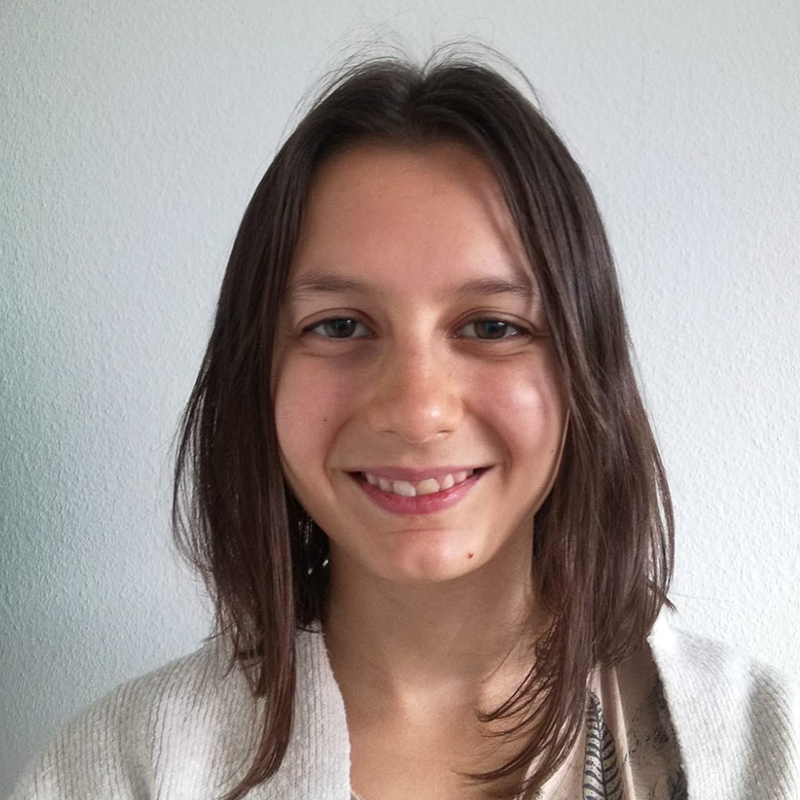
CW: Okay, all right! That’s everything then. Thank you so much for doing this interview with me. If you could, I’d like you to send me, maybe by email, a recent photo that you took so I can include that in the archive. And I’m going to be sending you a consent form to sign for depositing this interview into the Oral History Archive for Hampshire College. And I’ll be sending you a transcription of the interview as well if you’d like!
AH: Yeah, I would like to see the end product! And also with reactions, and what did the others, what they interviewed for different people.
CW: Definitely! All right. Thank you again!