
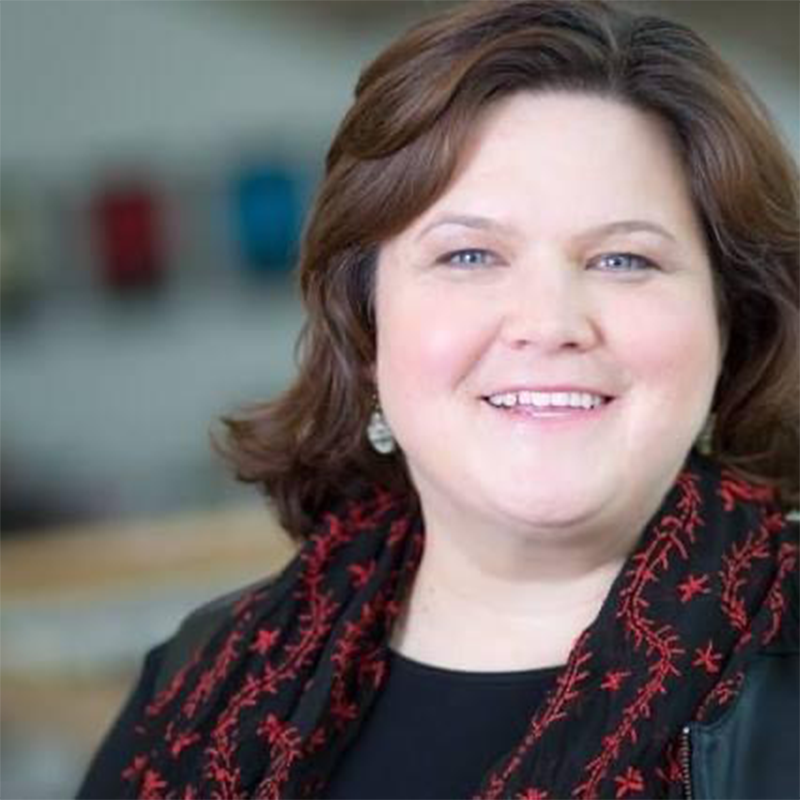
Interviewee: Katie Scott
Interviewer: Eliza Perkins-Hart
Date: November 23, 2020 Via Zoom
Topic: Working as a Nurse and as an elected official during COVID19
Eliza: This is Eliza Perkins-Hart. Today is November 23rd, 2020. I’m interviewing Katie Scott for the COVID-19 Oral History Archive. This interview is taking place over Zoom. This interview is sponsored by Hampshire College and it’s part of the First Year Seminar, Pandemics. Can you state your name and spell it for me please?
Katie Scott: Sure. My name is Katie Scott. It’s K A T I E. Last name Scott, S C O T T.
Eliza: Awesome. Can you please state where you’re located?
Katie Scott: So I am right now in Ann Arbor, Michigan and work in Ann Arbor, Michigan as well.
Eliza: Okay, awesome. Do I have permission to record this and enter it in the Oral History Archive?
Katie Scott: Yes.
Eliza: Awesome. Thank you. So I’m going to get started with the interview now. What is the year you were born?
Katie Scott: I was born in 1972.
Eliza: Awesome. Where are you from?
Katie Scott: I am from Michigan. I was born in East Lansing but saw the error of those ways and came to Ann Arbor. No, I was born in East Lansing and lived most of my life in the suburbs of Detroit with the exception of just about two years, where I, about a year, a little bit more maybe where I lived abroad, in Ireland and in London.
Eliza: Oh, that’s actually really cool. What do you do for your occupation? How many years have you been in it?
Katie Scott: So I do a few things from my occupation because I like to be really busy. So primarily I’m a registered nurse and I work in the ICU. I’ve only ever worked in ICU for my entire nursing career. And I’ve been doing that for over 10 years now.
It was a quote unquote second career for me: before that I was doing my doctorate in English literature, did everything, but write the dissertation. And then switched over to that. My other job that I do now also is as a Washtenaw County Commissioner. And that’s technically a part-time job, but it’s really a full-time job.
I’m also a full-time mom. Trying to do home-schooling of a 13 year-old boy. And I’m also in my local union leadership. Oh. And I’m a grad student. Let me not forget that I decided to go to grad school in the middle of all of this as well.
Eliza: So you are definitely very busy. So, as a County Commissioner, how has your daily life changed as a result of COVID-19?
Katie Scott: That’s a really good question, Eliza. My day-to-day life as a County Commissioner, in some ways I want to tell you that it’s gotten easier. In the sense that I am not like driving all over the place to go to different meetings, that I can zoom into meetings.
And I feel like I’m much more effective with my time. That way, that I’m not like driving all across Washtenaw County. So in some ways that’s a bonus of the pandemic, but the downside to that is that I’m not driving all over Washtenaw County. So, and I’m not seeing people…like you have a different type of connection when you are talking to people in person and seeing them and walking around. Like tonight, for example, we have the Washtenaw County Democratic Party Convention. And I’ll come in on zoom and it would be great to see people’s faces on zoom and conduct the meeting business on zoom, but a big part of that meeting. And before it was like going to the meeting and talking to people and finding out what’s going on in their lives.
I don’t have that same connection with people when I don’t get to do that. Like even our County meetings are all on zoom. And it used to be, we go to the County Administration Building. Sometimes there’d be people there that wanted to address the Board or people who are interested in that evening’s topic and they would be in the audience.
And so, before the meeting would start, you could be talking to people and inbetween meetings, the same thing, and you just made a different type of connection with people then you’re able to do on Zoom. In some ways I can see the advantages of having these meetings. I am way more effective with my time, but it’s difficult that I feel like I don’t actually get to sit down and talk to people because clearly I’m an extroverted type of person.
And I feel like it’s really helpful to sit down and have one-on-one conversations with people. That’s something I learned like doing union organizing. It’s not as helpful to call somebody on the phone and talk to them, or even text them as it is to talk to them, one-on-one, and then that taught me so much about thinking about what it was like to be a Commissioner.
And so not being able to have that one-on-one time with people, with people in the community and with my colleagues on the Board, sometimes makes it more difficult to just think about how we get things done in a different way.
Eliza: Yeah. I mean, I can definitely see how that would make it more difficult. So I mean, being on the Board of Commissioners and everything, what was the process of shutting down the County and imposing the quarantine?
Katie Scott: So we really looked for at the start a lot of guidance from the State Government.
And so we talked all the time. We made sure we were in contact with the Washtenaw County Health Department, with the director of the Washtenaw County Health Department. I, early on was like, let’s shut this all down. Like, get everybody at home. Everybody needs to wear a mask. I think probably because of my job as a nurse, like I could see what was coming.
I saw what was happening in Europe. I saw what was, and I was like, there’s no way we’re going to, or not going to get this. This is going to happen so immediately I really was like, shut it down. And then, you know, the executive, the County Administrator was, you know, we don’t have that authority.
And so we talked a lot to the Public Health Director because she is the one who had the authority in the county. But I think in the beginning, what’s interesting is that … But it had been so long since anybody had to kind of do any type of public health laws like that, like thinking about quarantine and keeping people, telling people they couldn’t go out or wearing masks.
It was such an unusual position that we hadn’t had to think about things like that in so long, it was a lot of like, tenuous, like where exactly does the law stand on these things? And so I know that the County Health Department Director, Humana Lovelock, worked a lot with the state organization with MDHHS and got a lot of guidance from them about what to do.
And then ultimately we had a lot of meetings again on Zoom at this point, too, to talk about how we were going to do this and make sure it was fair to people who were working for the County. Also, that was a huge thing that I was particularly concerned with. I think because my background is in labor and unions.
I thought, like if we shut down the County, what are we going to do to help mitigate the kind of economic sting of people who are working for the county and what are we going to do to take care of the people who count on the County for services? Because a huge part of what County government does is Health and Human Services.
And I thought, if we shut these things down, how do we make sure we’re still taking care of people? So luckily there were contracts in place for most of the workers at Washtenaw County. They had union benefits defined in case of an emergency and so it was clear that they were still going to get paid and then there was always recognition of the importance that some services just aren’t going to be able to shut down, that you have to still provide some of these services. Which was obvious to me too, since I was working as a nurse. I mean, as much as … I’d like to go in my basement and like craft for three months or cook for all my people and read a bunch of books, I was like, it’s not going to happen. Like you have to be out there still. So ultimately the decision to cut to shut down County government services really took, it was a lot of communication with the State and with all the stakeholders in the County, sort of just making sure we were bridging between all of those different aspects of government and government services.
Eliza: So kind of in the same vein of the last question, the U[niversity] of M[ichigan] started to talk about bringing back students, which I know I was concerned about. Kind of in the same vein, being the County Commissioner, what were your concerns about the students returning to campus?
Katie Scott: They’re like all the same concerns I have right now. I mean, I was floored over the summer. There were several meetings that the Governor’s office, created to talk to Washtenaw County elected officials, particularly people in Ann Arbor and Ypsilanti, and, University officials from both Eastern and U[niversity] of M[ichigan] and, also, with the Governor’s office representatives there as well.
And my concerns from the very start were … I want to be clear, I know they’re that they’re young adults, but … was a student and I went to U of M and I just know, you’re not always thinking of the best aspects of what’s best for the community at that point in your life.
I certainly wasn’t and I think I still was a pretty broad minded undergraduate. But I think maybe even as an undergraduate, I might not have really been scared about COVID-19 and what it meant for me or what it meant for the community. And I think I’d probably would have been a little bit more lax.
Like we saw a lot of the students and I had a lot of concerns about the students coming back as a County Commissioner and representing residents of the County. I was concerned that our kids in the communities were going to be out of school and not be able to be in-person school for K through 12.
But University students were going to be in school. And it didn’t seem to me that there was that much of a difference in the risk with K through 12 and then with University students. And in fact, the University students, they had even more of a risk — communal living, people wanting to party, people wanting to play sport[s], people doing study groups.
I mean, the list goes on and on. And … with the County Health Director, in conversation with her, we made a decision that we would limit the number of people that could be part of a gathering before students came back. So 25 for outdoor and 10 for indoor. And …I guess it’s a compromise.
We know where I stood. Like in March, I wanted to be like, “Shut it all down!” And I really wanted to say that again right now when the students were coming back. One of my concerns though, was even with those rules and as much as they wanted to shut it down, I also wanted to make sure we understood how we were going to, like police the rules.
Because of course we’ve learned so much so tragically over the past few years about how policing happens in our communities … In Ann Arbor, is not immune to that or nor is Ypsilanti. And so [I] was really concerned that we would have these rules about parties. And I want to make sure that we weren’t going to see them selectively enforced.
I want to make sure that members of our community who are people of color, weren’t going to be unduly, like reprimanded, for things like this. I wanted to be sure that we had a way to make sure that if we were doing it, that it was … equitabl[e]. Like if people were enforcing that rule, that concerned me.
And it also concerned me that, to my other concern, was like students really just wouldn’t care. I mean, how many times did we do things as students that were, for sure we shouldn’t have been doing, but we didn’t care? And, I said this at a meeting too. I wasn’t necessarily concerned about what the City Police might have to say about my behavior. I would have been more concerned that I was kicked out of the University. That would have been the number one thing that would have scared me. And that was where I really hope to see the University take a stronger line on students who were not following that kind of code of conduct.
And then — I might be jumping ahead — and then the University went back to school and I feel like all of my concerns sort of came true. You know, we saw a lot of pictures of people partying. We’ve seen the numbers go up huge[ly] for University students. Right when the students came back to school outside of my workplace as a nurse, there are several dorms. And I could see students lined up like down the street just to get into the buildings, to try to eat dinner. And I thought, “This is going to end woefully for everybody.” And unfortunately, I mean, I love when I’m right, but unfortunately, in this instance, I was like, “Yup, I was right.”
And like, look, look, what’s happening here. … This is not good for anybody in our community. It’s not good for the students. And here we have it.
Eliza: Yeah. So again with the University, there were a lot of complaints about the quarantine housing provided by the University, like cockroach infestations, not getting food, things like that. I was wondering if the County has done anything to address those concerns, or if you’ve heard of those concerns.
Katie Scott: I have heard of those concerns. We haven’t necessarily done anything with, to those concerns directly, other than talk to the University, to be sure that they were addressing those concerns, especially about the quarantine and the contact tracing.
That is definitely something that the County Health Department had stayed in constant contact with the University, about the University. And the County is, you know, we are in these parallel universes sometimes. And so the University is a behemoth, and sometimes it’s hard to make sure that you’re getting on target with everything with them.
But I do know that in … even now, the County Health Department is working in hand in hand with the University. In a lot of things and that they have addressed some of the concerns about contact tracing and about quarantine and about quarantine housing. I mean, at one point in the middle of all of this, Eliza, like I know … the number of people needed to be in quarantine and social isolation was outstripping the housing that they had available. So this whole idea that people would leave their dorm and go to, you know, the Northwood Apartments or what have you. It ended up then it couldn’t happen because there were just too many people in quarantine.
So then you had all these people who are just … I mean … honestly, I think as a student, I might not have been as concerned. I might have been, “This is sort of unprecedented,” but I, as a parent I just don’t — I would have been beside myself.
Eliza: So going on again with the University. There have been a lot of cases. I mean, it’s been astronomical, according to records and testing, there’s been 400 cases a week. And the positivity rate is like 1.7 to 2%. Did you talk with the University about any specific plans of action to take, to make sure that you thought we stopped the spread as much as we could?
Katie Scott: Right. I think this is my assumption. … I think that Humana Lovelock has talked much more to the University about things like that than the Commissioners themselves. I did have some frustration as a County Commissioner in some of my discussions with the University about these things, because I wasn’t always getting the answers I needed.
I still don’t feel I’ve had the answers I needed. I don’t know why that necessarily is. I think Humana has impressed upon them the need for contact tracing and the need to make sure that people had places to quarantine. I did bring some concerns to the University about things that I think that maybe helped, helped them think about different aspects of how they were doing in-person schooling. But I know that the Health Department and the University talk regularly, and about every two weeks, we do have a touch-base meeting with the two major Universities, County officials in some Counties, electeds, including me, if I’m not at work in the ICU and, liaisons from the Governor’s office, just to make sure we’re all talking about what to do.
Problem is … things become so PR you know, like this is what we’re doing and it’s great. And here’s how everything is going to be fantastic. And … it’s hard to sometimes get the whole story. And I think that became really evident when we saw how the University either responded or didn’t respond to having a pandemic and in-person class[es]. You might be able to tell him I’m not thrilled with that decision.
Eliza: Yes, and definitely. So, according to articles in MLive, there’ve been a lot of, about 1400 layoffs of people in the U[niversity] of M[ichigan] Hospital. So with your background in unions and being a nurse, how did that affect you? And did you like have a role in advocating for the nurses?
Katie Scott: Yeah. So right at this point in time, … we …haven’t had any nurses who’ve lost a position due to COVID. We’ve had nurses call. They’ve been “RIFed,” so that’s a reduction in force. So some people have been furloughed. Or laid off from their positions or … they’ve shut down those positions and found them positions elsewhere in the hospital.
Most of the people in the hospital system who lost their jobs have been people who don’t have representation. So, there were, for example, 38 techs in the Emergency Department who were fired. They weren’t even laid off. They were just like go. And it has impacted nursing because the jobs that those people would do, our jobs, that nurses then picked up and like, we’ve seen like our physical therapy department there.
A lot of what’s happening too is like, we’re losing people by attrition. Not only did they fire people to kind of come up with this economic recovery, but they’re also just not rehiring people when people leave. So we have fewer physical therapists. We have fewer respiratory therapists. We have fewer clerks working.
Fewer sitters coming for confused patients at the bedside and all of those things. Ultimately impact nursing too. So if I have a confused patient — and I’m in the ICU — was trying to pull out their breathing tube or pull out chest tubes, I can’t leave that patient and see my other patients.
And so unless I have a sitter there who can try to help redirect that patient then, and so, or my other option is to restrain that patient. …For most of us in our scene, I feel like that’s our last resort. Like, we don’t want to restrain a patient. Your patient’s already confused and now they’re tied to the bed? That’s horrible. Like that’s absolutely horrible. But then, that’s like your option. And at some point, when you don’t have the staff to do that, or you’ve got, you know, I’ve got two patients who are really busy. I can’t do the physical activity with them that they need to do post heart surgery to make their recovery optimal.
If I don’t have techs there to help me, if I don’t have more nurses in the unit to help me, if I don’t have physical therapists there. So ultimately all of those things to try to create an economic recovery and let people go and not hire people and lose people by attrition, it’s definitely impacting patient care.
And as you may have seen. There’s a lot in the news or at least the news I look at, there’s a lot out there about healthcare worker burnout, which is real, because of what we faced in the first go around with the pandemic. And what we’re seeing coming in the second round. Some people are having it right now.
We’re just sort of watching the wave, get closer to us and I think it’s, it’s really difficult to be a healthcare worker right now.
Eliza: Yeah. So going along with how hard it is to be a health care worker, there are a lot of things in the news, as well as talking about burnout, talking about healthcare professionals coming home to their families and being scared that they’re bringing COVID home. So are there specific precautions that you, and other medical professionals that you know, have been taking to ensure your family’s health and safety?
Katie Scott: Yeah. It’s funny that I’m still sitting here in my work clothes ‘cause usually — I just wanted to make sure I wasn’t like ridiculous when I got home to do the interview — but usually, I come home when, in the first go round of COVID, I didn’t bring any clothes into the house. Which is interesting, ‘cause I don’t have an attached garage my neighbors are like, what is that crazy lady doing? This go around in COVID. I do come in the house in my clothes, but I go straight to the basement. I mean the shoes stay outside. I go straight to the basement. I put the clothes in the washing machine. I come upstairs. I take a shower, I take a Dial soap shower. My skin has never been so dry. I take a Dial soap shower. I wash my hair and I, then this is so ridiculous, but I read a study that talked about gargling with Listerine for 30 seconds to two minutes, might show some help at mitigating the disease. So then I gargle for 30 seconds and then I also read another study that showed a 1% rinse of Johnson’s Baby Shampoo in your nose might help also. I don’t do the rinse, but I do, I made a solution and I do swab my nose then. So it was a little ridiculous. Like I have a whole like routine of cleaning myself when I get home. And it’s not just from seeing the COVID with my patients … the scariest [thing] now is that it’s COVID from my peers.
And so it’s so out there everywhere … I have a lot of peers who have gotten COVID and they’ve been at work and then they go home and and then they have COVID. And you think like, “Oh, I just shared a cubby with this person all day,” or “I eat lunch in the same room as this person.” And now two days later, they’re, you know, emailing out to the unit, “This person has given me permission to tell you that they tested positive for COVID,” and you think like, “God, what did I just, what did I just get at work? Not from my patient, but from my, from my colleagues.” So I mean, beyond what I do when I come home to keep my family safe, you know, huge part, like we work 12 hour shifts and it’s really nice when you get to take a break and like have lunch with your friends and just decompress a little.
I’m not doing that at all anymore. So I eat lunch by myself, like in a room by myself. I know there are still people who eat lunch together. I’m just not doing it. Like I either eat in a room by myself or if my car is parked closed, I’ll go eat in my car. I watch a little Netflix just to be like, I got a timeout from something, but I don’t want to be around anybody.
I don’t drink any water out in the unit. I go to our pantry room and I had to tell myself this weekend, “Make sure you go every four hours to get something to drink,” because I realized that I’d been working for like eight hours with the mask on and have had nothing to drink.
And I only realized that when I’m like “Why do I feel dizzy?” Well, because you’re not taking care of yourself. ‘Cause I just don’t want to take my mask off and expose myself to anybody who’s carrying COVID into the unit, whether it’s a patient, a visitor, or a colleague.
Eliza: Yeah, that’s all very valid. So we’ve talked about a lot today. Is there anything that you wanted to specifically talk about or something that we skimmed over?
Katie Scott: I think just the major thing is just …kind of what I’m saying about the burnout. ‘Cause the burnout for health care workers is so real and it’s really tough.
Like I feel like I might cry a little. I have been doing this job for, you know, over a decade, taking care of really sick people in the ICU. But between working in the ICU in Detroit and now working here in Ann Arbor, I’ve really seen some really sick people. And not like COVID though.
These patients are sicker on a grander scale than anything we’ve seen. And veteran ICU nurses, I guess like me tell people that, and it’s so frustrating that people still want to say it’s a hoax and that it’s not real. And that it’s no worse than the flu.
I mean, I’ve seen some people sick with flu. It’s true. But I haven’t seen people sick with flu to the great numbers that I’ve seen people sick with COVID. And it’s so hard. Like I said, I texted my mom the other day. I mean a little bit of hyperbole, but I texted her. I was like, “I hate my job.” And my mom wrote back and she said, “This is so sad. You have always loved being a nurse.” And I was like, “I have.” I thought I would hate it when I started doing it. ‘Cause I was like, I’m not sure how I’m gonna like this nursing lark, but I ended up absolutely falling in love with it. But it is just so hard lately. I would feel like I was hard pressed to tell somebody to go into nursing.
Whereas a year ago, I would have told everybody it’s a great profession and it offers an enormous amount of flexibility. And it’s one of the few middle-class livings left out there for people that’s a solid living. But I’d be hard pressed to tell people now, because is just, because of what we’ve seen, not having the protections that we need at work, to watching our staffing numbers dwindle, and the burnout that we have. And that society at large, of people saying “This isn’t real.” And it feels like it’s so hard, continued to go into work like that. It’s really nice that people were healthcare heroes, but I, at a certain point, I don’t want to be called a hero anymore.
… I can do really phenomenal things in poor conditions. It’s true. We do do that, but I don’t want to keep doing phenomenal things in poor conditions. I want to do things to help people in the right conditions. We need to help those people. And I am not alone and that’s the really scary part about this is that. What we might see in healthcare, either during this pandemic or after the pandemic about people leaving this profession is something we’ll have to reckon with.
Eliza: Yeah. Thank you so much for this interview. It was super interesting. I’m going to stop the recording. But if you’ll wait so we can debrief.