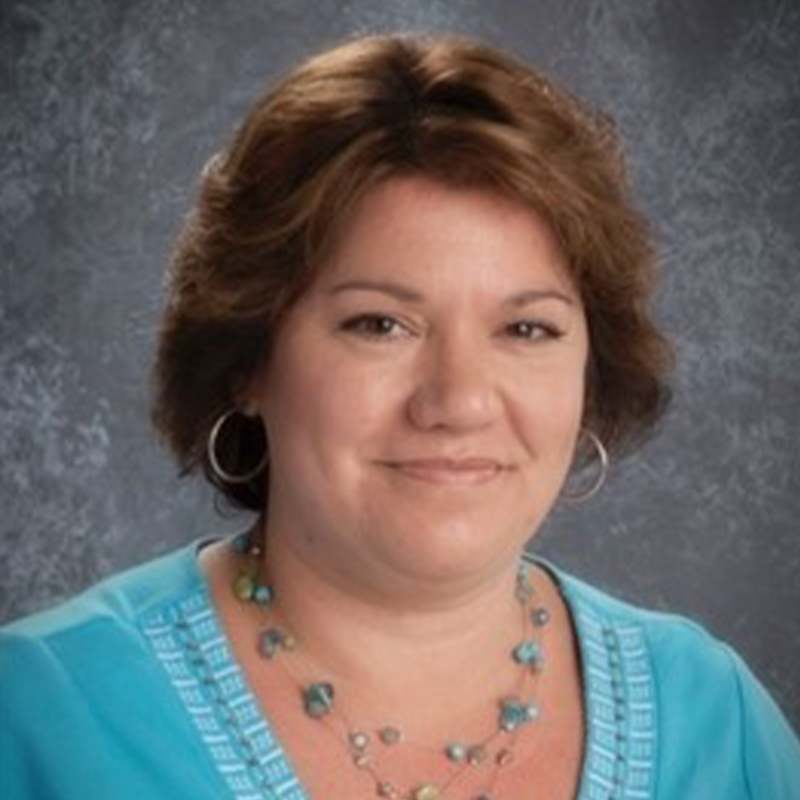
Interviewee Name: Lisa Sheridan
Location of Interviewee: Newtown, CT
Date of Interview: October 19, 2020
Interviewer: Max Browne, Amherst, MA
Via Zoom
Subject: Teaching at a public high school during the COVID-19 pandemic (March 2020-ongoing)
Max Browne: This is Max Browne. Today is October 19, 2020. I’m interviewing Lisa Sheridan for the Hampshire College COVID-19 Oral History Archive. This interview is taking place over Zoom, and this interview is sponsored by Hampshire College and is part of the first-year seminar Pandemics. So where are you located right now?
Lisa Sheridan: Right now, I’m at the high school, Newtown High School in Sandy Hook, Connecticut.
Max Browne: I’m located at Hampshire College in Amherst, Massachusetts. Now I need to ask you to give me permission to record your words and deposit this interview in the Hampshire College COVID-19 Oral History Archive.
Lisa Sheridan: Yes.
Max Browne: Alright, thank you. So what year were you born, and where are you from?
Lisa Sheridan: I was born in 1965 and I grew up in New Jersey. I moved to Sandy Hook in Connecticut when I was 19.
Max Browne: What’s your occupation and how many years have you been doing that?
Lisa Sheridan: I am a math teacher. That’s my certification. Right now, I case manage kids with 504 Plans in what we call the FLEX Department at the school. But I am a certified math teacher. I got certified in ’93 and I have been teaching since then, except for 8 years when I was home with my kids, but I was teaching SAT prep at that time.
Max Browne: You already said what subject you teach; you teach math. So you teach it at the high school level?
Lisa Sheridan: Yes.
Max Browne: Do you remember what your first thoughts or impressions were when people first started talking about closing the schools back in March during the pandemic?
Lisa Sheridan: We thought that we were closing for two weeks. So when we first closed … we were one of the last schools in the area to close. My husband teaches at Wilton [CT], and they had been closed down for almost two weeks by the time we got shut down. Each town was waiting for a case to actually happen in the town before they would shut down. Because schools were closing all around us, it was a little scary, and we didn’t know what was going to happen. But because we were one of the last ones, we were able to start planning for it, so we actually got an online learning in place before we shut down. Like I said, we thought it was just going to be for two weeks, and then — lo and behold — it was for the rest of the year.
Max Browne: What kind of adjustments did you need to make when the school closed and you were asked to start distanced learning?
Lisa Sheridan: Oh, goodness, well I had to … I got my Master’s [Degree] in — I did my Master’s online, and I got it in instructional technology. I was a little more prepared than other people, but even with that, we were lucky that we had had our Google Classrooms in place already. We were able to just amp that up a little bit. But the hardest thing was getting used to talking to kids online instead of talking to them in the classroom. It doesn’t transfer as easily, as I’m sure you know. That was really tough, and it’s still tough. We’re still hybrid right now, and I have a hard time when kids are at home trying to connect with them. It’s much easier in the classroom.
Max Browne: You might’ve answered this a little bit already … so they did Google Classroom, basically? What technologies did the school put in place for distanced learning? Was that it?
Lisa Sheridan: They call it the “G Suite,” the Google Suites. We have Google Classroom; we already used their Gmail; we use Google Meet; we don’t use Zoom, and because of that there’s a little bit more security than using all different platforms.
Max Browne: Did they offer you any training on these technologies? I know you said you’re more proficient in them, but was that offered?
Lisa Sheridan: Yeah, they did. Before we shut down for good, there was a day that we didn’t have the kids come in to school, and we had a professional development day where we all learned how to use Google Classroom. We did some online stuff; we practiced with our colleagues doing the online classes. Once we realized that this was going to be a long-term situation, they had us … on Fridays — was a day that you didn’t have to specifically connect with your classes online. You could just go do professional development, and every week they were offering more and more stuff. Again, it was hard, because you had to do it all online, but they had people learning Paradeck and … I’m trying to think of the other ones; I don’t really use them too much. But it was just ways to get more used to it. There was how to use different aspects of Google Classroom; how to connect them to your grades; how to do an efficient Google Meet as a class.
We had decided early on that we weren’t going to do classes over Google Meet, because not every kid had access to the computer at that specific time. We didn’t know what the home situation was for a lot of kids. We had to still get a lot of kids laptops, so we were scrambling to do that. We decided to just post assignments, and then you would be available at certain times to meet with kids and help them out. So for last spring, that’s how we did that.
Max Browne: I think you kind of already answered my next question, which was: what was it like transitioning to that method? So, how did the students fare with remote learning?
Lisa Sheridan: [Laughs] Not well. I work with the identified 1% of the school that is struggling — whether it is academically, or with a social-emotional issue. I work with a lot of anxiety kids. We already were not offering — I mean, they weren’t able to come to school, so that was a huge adjustment for them, as in all of us, but these kids with the high anxiety were also … it was a scary time. Everybody was scared about getting sick. We tried to make it a lot easier for the kids. For instance, that final quarter only counted for 15% of your final grade, it wasn’t the whole thing. We didn’t do final exams, but we still had kids that weren’t engaging very well, so that’s something we worked on during the summer for the fall semester.
Max Browne: How much did the school district communicate with teachers over the summer about the plans for the fall?
Lisa Sheridan: It’s interesting, because … there was so much communication up until the end of June. And then there wasn’t communication, but it was okay, because everybody needed a break, and the school was trying to offer that, to let everybody back off and chill. We would get the occasional notification, and then what they did was they pushed back the first day of school — for students, not for staff, so when we came in, that’s where we got inundated with everything. We had a week to learn how to adjust to coming back to school.
Max Browne: What did the administration and teachers in your school decide on for the fall?
Lisa Sheridan: The teachers really didn’t have any say in it. We started off with a hybrid model. We’re going to semi-full-format on November 2nd. We can’t offer lunch safely, we decided, so the kids are going to come in for periods one through five, then go home, and period 6 will be online. But it won’t be hybrid, so everybody will be back in the school. The decision to go hybrid was something made by the administration — the Board of Ed — and it’s kind of based on the model that Connecticut put forth, and the metrics that the governor and the state Board of Ed put out. Our health department looked at that, along with the administrators, and decided to go hybrid.
Max Browne: What did the hybrid model exactly look like for this first part of your semester?
Lisa Sheridan: It’s — I don’t know if you can see this. [She grabs a laminated sheet from the wall] We switched it from when you were here, so now it’s — I don’t know if you can see that. We have just four classes a day, as compared to our normal six classes a day. It’s just one through four on one day, and then the next day is five through eight. Monday is one through four; Tuesday is five through eight, and then Wednesday, everybody’s at home.
Oh, I’m sorry, let me go back a minute. We divided all the kids into two cohorts. So there’s Cohort A, which is last name A through L, I think, and Cohort B is last name M through Z. So on Monday and Tuesday, Cohort A is in the school, and Monday is one through four, and Tuesday is five through eight. Then Wednesday, everybody’s at home, and we do classes in the morning, and then in the afternoon are the counselor workshops, the senior experience, the Capstone project, extra help time. Then Thursday we switch, and Cohort B comes in, and Cohort A is at home. Then we do the same thing: Thursday is one through four, and Friday is five through eight.
Max Browne: That’s interesting.
Lisa Sheridan: And we do have students … we call them Cohort C and Cohort D. Cohort C is the special needs kids, who come to school every day. Cohort D is the kids who have chosen, because the state of Connecticut allowed them to choose distance learning — just students — if they don’t feel comfortable coming to school, so we have a small percentage of kids that do distance learning all the time.
Max Browne: Did you think that was a good idea at the time? How did you feel about this decision?
Lisa Sheridan: I do think it was good. I was scared to come back to school, but then once I got here and I saw everything that was put into place, I felt a lot more comfortable. I’m actually excited now to have everybody back. A lot of us are struggling with the hybrid, because even though it’s nice not having so many kids in the school at once, it’s so difficult to have half of your class in the classroom and half of your class online, and try to take care of all that at the same time. It will be nice to have everybody back in school. The classes are — it’s going to be a big adjustment, because we’re going to 50-minute classes. We’ve been dealing with these 90-minute classes. And we’re going back to six classes a day instead of four. But I’m glad to have everybody back soon.
Max Browne: Is that the plan for the rest of the year, as far as …?
Lisa Sheridan: It’s to January right now. They haven’t made a decision for the rest of the year. I think that we’re going to go through midterms and see how everything is then.
Max Browne: So, you guys are doing midterms again?
Lisa Sheridan: Yes.
Max Browne: I’d assume it’s easier to do that now that some stuff is in person.
Lisa Sheridan: Yeah. So there’s still kids that are at home, and I don’t know what they’re going to do with the midterms with them. They might ask them to come in to an isolated place and take their midterms, because they don’t want anybody taking them at home. But I don’t know yet. We’ll see.
Max Browne: I think you kind of answered this, but how are things going now? That was my next question.
Lisa Sheridan: I think they’re going really well. When we first came back, it was kind of touch and go, because everybody thought, “This won’t pass.” You know, we’ll get all the kids in school, people are gonna start getting sick, and we’ll be back on remote learning. But we’ve only had three isolated cases since the beginning of school, and one of them was a kid that is remote learning all the time. There’s been two other students, and no teachers, no staff, anything yet. I think it’s been going really well. And like I said, everybody hates hybrid, so I think it’ll go better once we’re all back in.
Max Browne: I was wondering if there’s anything you wanted to add, I guess?
Lisa Sheridan: I don’t think so. I think your questions were really good and they covered everything.
Max Browne: Thanks! One more thing I wanted to ask was, were the COVID cases at your school particularly, or was it throughout the district?
Lisa Sheridan: The first one, I don’t know where it was. The second one was a high school student, but again, it was a Cohort D, so they weren’t even in the school; they caught it out. And then the third one was somebody in the high school, but I don’t know who they are. They don’t tell us who they are or what grade they are. We just happen to find out that it was the kids at the high school.
Max Browne: Alright. Thank you for the interview!
Lisa Sheridan: It was good to talk to you!