
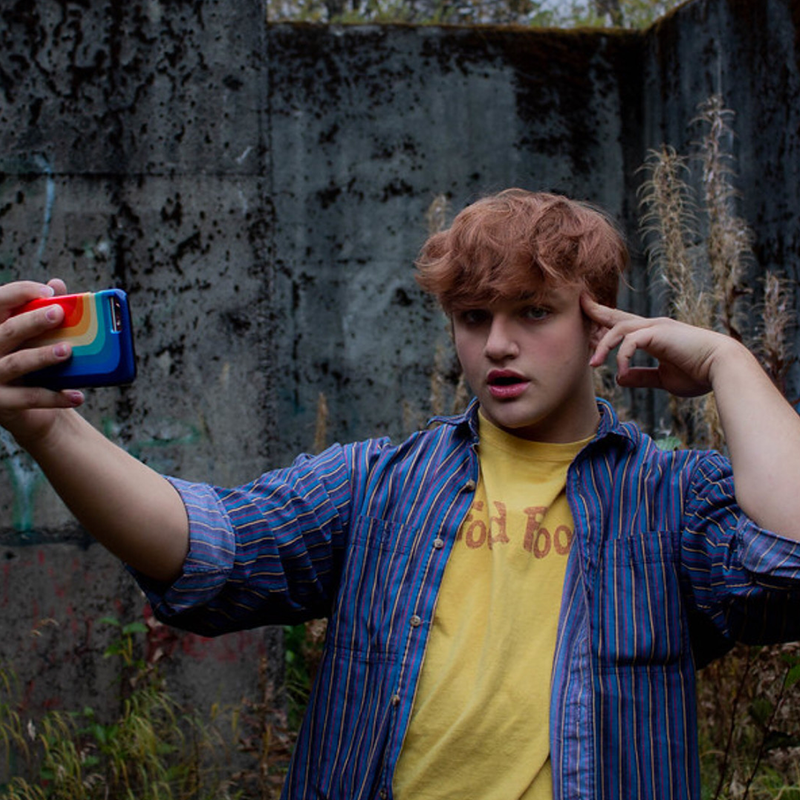
Interviewee: Del Rocheleau, Durango, Colorado
Interviewer: Serabella Jones, Amherst, MA
Date: October 17, 2020, Via Zoom
Topic: Front line workers/High School Education during the Pandemic
Serabella (SJ): Hello. My name is Serabella Jones and today is October 17th, 2020. I am interviewing Del Rocheleau, for the Hampshire College COVID-19 Oral History Archive. This interview is taking place over Zoom. This interview is sponsored by Hampshire College and as part of the First Semester Pandemic Seminar. So, Del, can you just state, like where you are now, what state you’re living in, like college, all that stuff.
Del: So, I am currently a freshman at attending Fort Lewis College in Durango, Colorado. I am 19 years of age. I previously, well during the majority and really all I guess, of quarantine, I was living in Kodiak, Alaska, where I was born and raised.
Serabella: So next … do you give permission …for us to record your words and deposit them into an interview for Hampshire College COVID-19 Oral History Archive? It’s a yes or no question?
Del: Yes, I, Del Rocheleau, give permission for my voice to be in your Archives.
Serabella: Perfect, thank you. That’s in the script. Thank you.
Del: Yeah.
Serabella: … I just need some basic biographical information. What year were you born? You kind of already stated that, but can you just restate for the record where you are from? Your occupation and how many years you were in this occupation?
Del: Alright, so I Del Rocheleau, I was born October 8th of 2001 … 19 years of age, I was born and raised in Kodiak, Alaska, where I lived until August of 2020, when I moved to Durango. My occupation, during the quarantine was, I was technically employed as a barista at Starbucks. But the Starbucks I was employed at was licensed within our local Safeway. So I worked at the Starbucks in Safeway, but I also worked in stocking in, compiling orders that people had placed over the phone or online. So yeah, technically yes, I would say barista at Starbucks, but I did a few other things, is that it?
Serabella: Yep. No, that’s perfect, and then my next question is: can you just describe a little bit about Kodiak? Because it’s such a weird, like place and like what the community’s like. When did you also first hear about like COVID and the national shutdown?
Del: So Kodiak, the way I experienced it was interesting. It’s a small town of right around 5,000 people. Technically we get to about seven to 10,000, if you start to include the villages across the entire Island. … But within the Kodiak City municipality, about 5,000 people. The majority of those are Coast Guard individuals, because we have a large Coast Guard base there. So it’s a large mixing of cultures. So I say this to really anyone who asks about Alaska: Alaska doesn’t really have an Alaskan culture. Because Alaskan culture is really just, to me, everybody that came and everything that was left over. So we have people from the Philippines, we have people from China. We have … a large amount of people from Hungary. And, so there’s a, I mean as I’ve just said, it’s a huge pot of cultures.
Del: But one thing about Kodiak specifically is that it somehow manages to be close-knit, but isolationist at the same time. Everybody knows everybody and everybody knows everything that’s going on. And everybody talks to everybody and everybody says hi, when they see people that they know in the grocery store, which is pretty much everybody. But at the same time, there is a very strong division between groups of individuals on the Island on the basis of religion, race, ethnic background. Oh, huge one is class, Jesus. Wheeze, there is a large division between those who are living in Kodiak because it’s gorgeous and they love the scenery and those that are living in Kodiak because they can’t afford to live. They can’t afford to move stuff. That’s interesting, yeah. What was the second question?
Serabella: Oh … when did you first hear about the COVID-19/national shutdown?
Del: It was second semester of my senior year at Kodiak High School. I remember really only talking about it with kind of my immediate friends, not even really my family, but one specific teacher. She was my Comparative Government and Politics teacher at the time. But she had been my teacher for several other courses, U.S. History, Alaska History, things like that. Jennifer Parnell. She is someone that I would constantly talk with. And in the classes … we would constantly have conversations about world news, international politics, things like that. So we were kind of really keeping up with COVID as the cases were starting to rise and as it was starting to spread internationally.
Del: And you know, kind of at first there was the, oh … it’s really not that bad. Why are we so worried? You know, countries are going to get a handle on it. It’s not going to spread that out. And then it started to spread really bad. So, right before, spring break, I’m trying to remember the date. It was like March 17th or something, right around there, is when it really started to settle in like, oh, this could actually be a potential real, huge issue. And I remember going into spring break, the only thing me and my friends at the time talked about regarding COVID West. Oh, well, if it gets bad, we’ll get a longer spring break and then spring break lasted through the entire semester.
Serabella: Oh my God. Yeah.
Del: That was an interesting time. Yeah.
Serabella: Yeah. I remember that, okay. And that’s a good transition into our next question. Did you ever think we would end up here like where our country is, like now?
Del: Not in the slightest. I mean, really, it was a hope, I’d hoped that government officials would handle the pandemic problem, but of course we know we were all let down. And at the start, when it was that first week of spring break, it was okay, this is chill. And then the extra week was added on and we were like, okay, this, you know, Oh, awesome. But also a little voice in the back of my head: this is slightly concerning. And then it got extended indefinitely. I think when it really started to settle in like, hey, this is getting kind of, kind of spooky, and then the death tolls started to roll.
And that’s when it hit me that this was a real issue that was not being handled properly. And I had this hope in my mind that, okay, people are going to see what’s going on and they’re going to fix it. They’re going to put an effort to, you know, quarantine and make the ramifications and, and try to correct their actions. And then they didn’t, and it just got worse. And so, yeah, I mean, I knew it would get here, but the rational and maybe even pessimistic part of my brain knew, you know, kind of how bad it would snowball, and how terribly people would treat the pandemic.
Serabella: Right. Yeah, well perfect. Another perfect transition. Thank you for being such a great interview subject! How did the pandemic affect your life as a high school student?
Del: Boy, how much time do we have?, I don’t know if this is really, totally pertaining to the interview at hand, but it affected me and the interview is about me. So, I’m going to talk about me: I have ADHD. I’ve known since a very young age and my family and I have worked with therapists and doctors to really kind of figure out what works best. We, because the area of my life that was most impacted as three most, young people suffering from ADHD that with school. Uh, so, you know, from a young age, I was kind of struggling to stay on task, to do the work that teachers were asking me to do and things like that, and by high school, I had really gotten a handle on things. I was taking medication when I needed it. I had good coping mechanisms. I had therapists that I could talk to about different issues that came up, but I had also never been schooled online.
Del: … I was not having a good time. It was not an ideal studying environment for me, and I talked to Eddie, anybody that I talked to, even people that didn’t have learning disabilities or even people that were neuro-typical, they were struggling as well. So I knew that, you know, it kind of helped that I knew that I wasn’t alone, but I started to fall very far behind in my classes. My grades started to drop and I was really struggling because something that I relied on was a specific atmosphere for learning. And for me, that atmosphere for was the school building. And I was in class. My mind was like, okay, we’re supposed to be learning right now, but when I was learning from home, my mind was like, no, we should be sleeping right now. We should be snacking right now.
Del: We should be relaxing right now. So it was incredibly hard for me, and you know, I started to figure it out through zoom calls with my therapist and whatnot. I started to, I hiked up the dosage of my, my Adderall. It was, you know, a bit of a situation, but, you know, I kind of did what I had to do to handle it, and it was entirely unique because, and I don’t mean to say this in like a self-congratulatory way, but one thing that I’ve also had you know, noticed throughout my life is an extreme. It’s very easy for me to form a connection with people that I’ve never met. And so another thing that really was grew with me was, you know, okay, I’m a high school there right now, I’m in all these classes and I’m supposed to be taking these classes seriously, but how could I do that when there are people dying? How can I do that when there is a global pandemic going on? How can I do that when these States of everything is in such disarray? And so that was, you know, the cherry on top of the cake, shake to do it, put chairs on cakes. Sorry. Uh, yeah, so that’s kind of how I was affected as a high school student, and an amalgamation of different ways,
Serabella: Because I’ve just been thinking about how fun this is going to be to type up a letter and reread it.
Del: I am very sorry.
Serabella: This is going to be really fun for me. Okay. So I’m going to kind of take a little like a left turn here, go back to … what was your job and like, where was it located? Cause I know you did have well, like two different jobs at the time.
Del: So, my primary job during the quarantine was working at Safeway, excuse me, sorry, so as I mentioned, I was a barista at Starbucks that one’s pretty self-explanatory. I was giving hope. We had to change our policies a lot, but it was pretty much the same, you know, cooking up pastries, whipping up coffee, drinks, things like that, but I think the most pertinent part of what I did at that time was my work in the, back rooms and same way. So we had a little area that we called the order desk. I don’t know if it’s technically called that, but at the same way that I worked at it was called the order desk. And that was where, as I think about Kodiak, is we’re already a fishing town. And as I mentioned, there are lots of villages.
Del: And I didn’t mention the lodges that are scattered all across the Island, way up in the mountain ranges, often forests on the other end of the Island, second largest in the U.S, stunted only by the big Island of Hawaii. But anyway, so, you know, we had these isolated individuals that still needed foods, still needed resources. So that’s what the order desk did. People would email or call us with orders. May even say, “Hey, you know, I need these groceries. I need these toiletries. I need these amenities.” And, we used the order desk, put those orders together, made sure that they were everything that the shopper was asking for, and then we would ship them off, so that really hyped up when quarantine hit and people were scared to leave the house more and more orders are being placed at the order desk.
Del: So, you know, there was more and more personal shopping that had to be done, for all these individuals in the community. So, that was where I found myself being pulled away a lot of the time, and also I just did kind of some general stocking work. I would help shelve things. I would put things away and crates and whatnot, whenever the time came. That was my kind of big job. I completely forgot what I was going to say. It was like out of a thing that I was going to bring up, but that’s okay.
Serabella: I’ll just jump into the next question then. What were some of your biggest concerns, especially working?
Del: My family. And that might be a little bit cliche, but I was worried, you know. I’ve worked in a grocery store. That’s where we get the most, well, that might be biased, but there’s a lot of traffic like, community traffic at grocery stores. So I was interacting with hundreds of members of the community on a daily basis. So I was terrified that I was going to bring the virus to home, to my family, to my younger immuno-compromised sister, to my older parents, to my grandmother, who we were constantly helping through the entire fiasco. And so, you know, maybe it’s the easy answer, but it’s the obvious, scary answer. I didn’t want to be the one that brought it home and put all of my family members’ lives in jeopardy. Granted my father and my older brother were construction workers.
Del: So they were also working through the entire pandemic. My mother was not and two younger siblings didn’t work either. So they weren’t doing much, but, you know, there was that constant fear that something would go wrong. Thankfully, oh my Lord, thankfully, nothing did. You know, we never contracted anything. We were never in contact with anybody that did. So we have that peace of mind, but you know, the pandemic’s still going on. We’re not completely in the clear. I’m not at home and working anymore, but my father and older brother are still construction workers. My mother is now back coaching, and my two younger siblings are being forced to go back to school in person. So the fear’s back and better than ever, so …
Serabella: Right. This is going to sound like a stupid question, especially after all that you said. Were there any positives to the situation?
Del: Well, okay. So I may sound like a shitty teenager for saying this, but you know, when quarantine had, you know, it was like chill, I don’t have to go to school anymore. Very selfish and also finger curling in on the monkeys, Paul right there. Like what kind of wish did I make for that? And I guess, well, one thing, be it good or scary, that has come up with pandemic is, you know, I know John, which members of my community are complete idiots. I’m taking everything seriously when they should, and I can see the silver lining there. But overall, I don’t think it’s been worth it, you know, with the hundreds of thousands of people that have been dying, you know, the families torn apart, the people being plungedeven deeper into poverty, a software that no matter what pathetic little positives I can come up with. Right.
Serabella: Well, I have just two more questions for you, and they kind of correlate together. Do you have any stories you think would be interesting for this interview that you think you would want to share or anything? I guess funny, something to lighten it up a little bit. I don’t know. It’s up to you. This is your time to shine.
Del: Oh, Oh gosh. Okay. So dive back into the recesses of my memory. … You know, in hindsight, but at the time painful, customers that refuse to wear a mask or anything like that. … So it was a little bit deeper into the quarantine, but I also worked at a local bookstore, you know, that was a little bit after the big wave had crashed down and everybody, you know, doing their thing or whatever. But I eventually later started working at the bookstore, or resed,?? I should say. But, you would not believe the amount of people that came in with those little lanyards and tag things that was like, “No mask, don’t ask!” or like, “Know my hippo ?? rights.” And then I would look at it and then I’d go to the computer that we have at the front desk and I Google it. And they’re literally just being sold on Etsy, like trying to get out of wearing masks because they think it’s uncomfortable or whatever. Like, my God, I don’t know how to tell you, but you absolutely would have died during the Black Plague. And I would have enjoyed watching you die.
Del: Right. And I mean, I may regret having that internalized in your archives at your college, but I mean, I need it. I absolutely mean it. You would have suffered and I would have laughed at you only because you would have made other people suffer and you deserved it. Absolutely. No stories.
Serabella: Yeah. I just, for some reason I thought about, I hope one day, maybe I’ll hundred years in the future, a professor is giving a lecture and takes your archive out and quotes you on that.
Del: That would be my luck. Yep.
Serabella: So …is there anything that we skimmed over that you think you would want to add? Any facts, information, stuff like that?
Del: Word. I mean, they’re, I mean, they’re the kind of big things maybe obvious, but I don’t know. Cause I mean, anytime I bring it up, people tend to tell me that I’m wrong. But, the essential workers out there, you know, and the amount of people that do not view me and all my other essential workers as people as just … We’re just commodities. We’re just some part of the Walmart that you shop at. No, we are real individuals. We have families, we have lives, we are trying to survive through this deadly virus and the amount of people that just kind of gloss over that fact, you know. And I think it’s just really telling, those same people that are anti- masters or, or the ones that just say, “If you’re scared, stay at home.”
Del: But I want to go and eat at Texas Roadhouse, whatever. Like who are you going to make ??serving? What if the waiter that you get? What if the chef that cooks you a meal? What if the hostess that seats you, doesn’t want to be there? What if they are scared for their life and the lives of their family members? What then? Because then you’re just going to bitch and moan. I’m sorry. I should not have cursed. …It baffles me, the ignorance that displays itself during trying times such as these. But, yeah, I guess really that’s the only thing that really constantly weighs on my mind with the current pandemic that we’ve got going on.
Serabella: Right. Well, Del, thank you so much for this interview. I know it’s all like a sudden thing, but, and also just thank you for like… I know you personally. And thank you so much for just … I don’t know if I want to say your service. I don’t know if that’s the right thing to say, but I know you were definitely a staple of the community and an important asset during the Pandemic. So thank you so much. And thank you for this interview. Any closing? Any other closing statements?
Del: Oh God, wear your mask? Wear your mask? I swear if I see you not wearing a mask or like having it, like below your nose, or like just wearing it off to the side, I will step on your feet. I will! I will step on your feet. I will take out your knee caps. I promise you! You are not so important that you get to just not wear a mask. You need to take into account your responsibility in keeping your community members safe and keeping your family members safe. And really, if you want to be selfish, keeping yourself safe, literally … just, yeah, that’s it.
Serabella: Okay. Thank you. … Going to be fun to type up later. Thank you so much again. I know you took time, different time zones, all that stuff was going on. But again, thank you. This is the end of the transcript. I will be typing the words that I’m saying to myself right now! Thank you again, Dell Rocheleau.