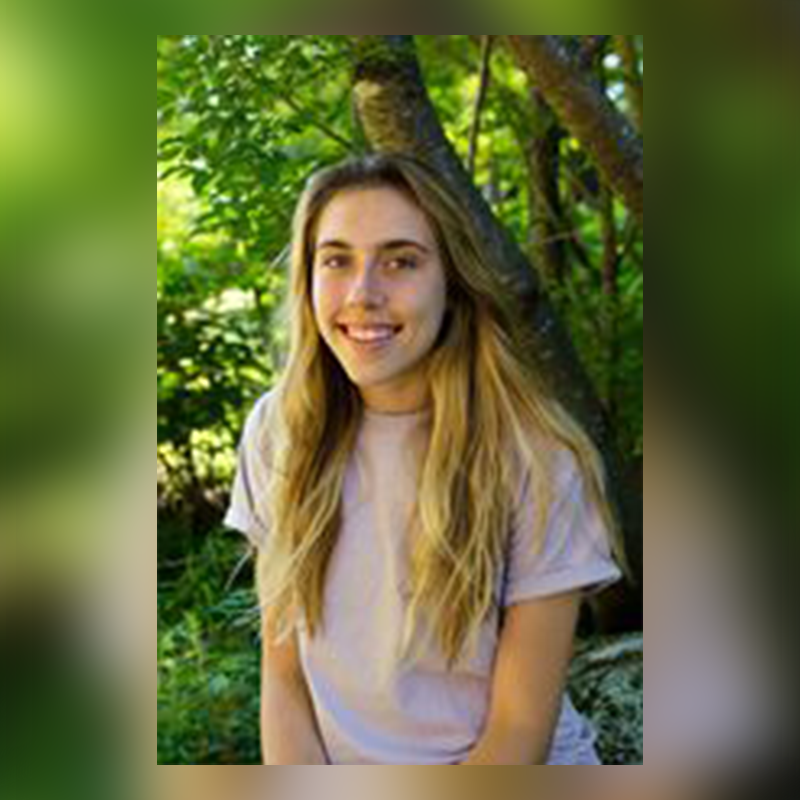
Interviewee: Gabby Jack, Windsor, NH
Interviewer: Wolf Skaller, Great Barrington, MA
Date of Interview: October 29, 2020, Via Zoom
Subject: Running a summer camp during a pandemic.
Wolf Skaller: This is Wolf Skaller and today is October 29 of 2020. I am interviewing Gabby Jack for the COVID19 Oral History Archive. This interview will be taking place over Zoom. I am here in southern Massachusetts. Gabby is currently I believe at Windsor Mountain International Summer Camp. This interview is part of the Pandemics Seminar for Hampshire College. Alright, Gabby.
Wolf Skaller: So my first question for you is, can you tell me a little bit about what your job is?
Gabby Jack: Yeah for sure. So I am the head counselor at Windsor Mountain Summer Camp. Basically that means I wear a lot of different hats. So I do a lot of … work with staff, work with campers — a lot of kind of one on one work with special case campers, like with anxiety or any other needs outside the realm of any counselor needs. I also handle social media, the marketing of our company, and anything else in between.
Wolf Skaller: Awesome. So when did you recognize that this summer was going to be impacted by COVID-19?
Gabby Jack: So we were actually heading to a camp conference in New Jersey and my husband and I were in the hotel room watching, I think, the basketball. And you know basically, at some point, the game stopped and all the players walked off the court and it was because of COVID that they shut it down. I think that was a moment when I think I had really seen it impact the outside world outside of the news that I had been reading. And that felt very real. And then heading back from that conference, we had a lot of conversation about what is going to happen and there is definitely going to have to be some kind of protocols in place. That’s when the cases really started popping up all over the country. So that’s … when we were like, oh this is going to have to … be a focus. I think mid-March was when that happened.
Wolf Skaller: Right, so how did the decision to continue running the camp despite the pandemic come about?
Gabby Jack: Right. So I think ultimately it was up to the Governor whether we could run or couldn’t. So as soon as he said yes, that we could open, we knew that we were going to. The reason really being that we are lucky enough that our camp directors, Jake and Kerry, have children and they had a first hand look at what these kids were going through. Being away from school, being away from their friends, constantly being in front of a screen. They kind of got to see that face to face. And … for me, talking with a lot of families and kids, they felt the same way too. They were really concerned about what their summer was going to look like. When were things going to go back to normal? That’s why we pushed so hard to make this thing happen, and not only for the campers, but for the staff as well … with stuck at home in front of their screens and we knew they needed this as well.
Wolf: And so, like, you said the government gave you the green light and there were some mandated safety requirements. Can you tell me about some of those and maybe some you put on top of that as well?
Gabby: Yeah, absolutely. So I think the biggest protocol was the testing here in New Hampshire which not every state implemented but basically for us, you had to have staff tested three times. They had to quarantine two weeks before arriving to camp. They then had to be at camp two weeks before campers set foot on the property. So we did that. Campers had to be tested twice before coming. So once was seven days and one was upon entry to camp. You know, we had to keep everybody within groups of 50. Ao we had to separate our camp into basically three separate camps: one for the youngest boys, one for the youngest girls, and one for our older campers. And that was because they consisted a large group 50 people.
The other one was that we could only run– in bunks we usually have 8-12 campers, but we could only have 8. That was it. Eight kids for every single bunk. What else? The cleaning protocols were very big, which is interesting now because I think there’s been a lot more research been put into whether or you actually need to do that. But that was kind of like every item you touched and everything you sat at had to be sanitized down after use. And we had to group items into different groups, so our oldest campers, they had a soccer ball, tennis equipment, their sports stuff. The other unit had their own and the other unit had their own. So those were some guidelines that we had to do.
The other guidelines were of course very medical related, you know. What to do if a camper is sick, which of course is difficult because the symptoms of COVID are similar to any common illness. So, we had to work with our nurses on how to handle that. Something we implemented is that within the first three days of camp, basically we wanted to wait ’til the second test came back before we brought the campers together in their 50 group. So kept them in their 10 person group. So that was the eight kids and two counselors for three days. That basically meant they could not be near another group of people. They had to really sanitize anything they touched even if it was from their cohort. And that’s basically so that if someone were to get a positive test, that only that small group would be impacted. We were lucky enough that we didn’t have a ton of bad weather over the summer, so everyone could spend a lot of time outside, which was also a requirement to a certain extent, but also very much encouraged
Wolf: Yeah that makes a lot of sense. Did the safety measures continue to evolve over the summer or did they stay relatively the same?
Gabby: They stayed the same. I think just keeping on top of everything was the biggest thing. You know, people can tend to get comfortable, so just making sure we kept to that strategy.
Wolf: How about finding staff who were willing to come out during the pandemic? Was that challenging? What was that like?
Gabby: I guess yes and no. I think the most challenging part was the international pieces. You know, we are an international summer camp, so we hire a lot of our staff from all over the world. We knew they weren’t going to be allowed to come, but unfortunately, the government did not really make a rule that the visa holders could not come to America for a very long time. They just kept pushing it back and pushing it back, so the hardest thing for us was to navigate [was] how do you know? Because basically, these staff members, if we were going to cancel on them, they were going to cancel on them, they were going to lose a lot of money because they had already paid fees. But if the government says they can’t come, they get to keep that money. So that’s where the grappling came from. So that was a struggle that was trying to navigate being reasonable to the counselors. So we just asked them to hang on tight and once the government said “Oh you can’t come,” they decided you know, that’s okay. We will cancel and come back next year.
But then, came the other issue of filling the spots of those counselors that were going to come. We put out the smoke signals to our current resident staff to talk to their friends. We spoke with a lot of former counselors who could potentially come back. I would say our Assistant Director, Curtis, did a very good job. And he was able to hire like 10 people in the matter of a week. Some were friends of staff members, some of them were siblings of staff members. They all worked out really, really well and we were also … Sorry! I’m talking a lot! I think something that we had going for us is that we were a summer camp that was opening, so we actually got staff from other camps that closed — who we were kind of in an alliance with. Like, hey, look we are looking for staff. If we say to you we won’t ask them to come back to us if they want to come back to you. Then we will hire them. So we got a lot of staff from other camps as well.
Wolf: Alright. And that’s how the staff responds. How did parents respond to you announcement that you were opening Windsor Mountain?
Gabby: Yeah, I would say most of them were ecstatic for their children’s sakes, for their own sakes. And so they were just very happy that we could make this happen. They were on our team the entire time, as you know. Your parents have a relationship with camp, so they would have been getting those emails that were updating our families all the time on where we were at, what we were thinking, what we were trying to do to make the process go faster. And the responses to the emails were fantastic! They were all like we are here with you! We will be there on arrival day if you can open. Like, we want to support you 100%. You know, there was a very small percentage that said I am so happy for you but unfortunately we can’t put our family at risk. If anything were to happen because maybe Mom or Dad or family member were suffering from an autoimmune disease, and you know, they just couldn’t risk that. But otherwise, very positive feedback.
Wolf: So were the number of campers greatly impacted?
Gabby: So we could only operate at about forty percent capacity for campers and the other piece was the same with the staff as well. We couldn’t have any international campers, so you know, naturally the numbers dwindled down. Anyway, so I wouldn’t say it impacted anyone. It kind of worked out pretty well with the numbers. A few could come who felt safe enough to come without procedures and the natural scope of things.
Wolf: Great! I’ve got two more questions. The first is did the summer feel the same to you?
Gabby: (Laughs) For me personally, definitely not! My role is very different. I didn’t get to interact with campers very much at all. Which is unlike any other summer that … I have felt in a lot of ways, it was one of the most difficult summers I have ever worked. I think just with the stress of the current climate in the world was … just trying to make sure that we were doing okay and that we were doing the best we could. But at the same time, it was also one of the best summers because of how hard everyone worked. Because of how much it made me appreciate the people I worked with and the people I worked for. It kind of reminded me of the reason that we are doing what we do and that we stuck to our camp values through the whole thing. So yeah, it didn’t feel normal at all, but in a lot of ways, it was such a special experience, that I think will go down in this camp’s history for sure.
Wolf: Speaking of this camp’s history, if the pandemic continues into next year, do you feel that you would change any of the protocols and if so what would they be?
Gabby: Yeah, I know one that we have talked about is that we would not want to have larger cohort groups next year if that was an option. Because we believe that once you’re here and once you have been tested multiple times, it doesn’t make sense not to bring everyone together at that point and have a full camp experience. So that would be one thing that I really hope is easier. I hope testing is a little more simplistic and maybe the government will accept different forms of testing as well instead of just the deep nasal swab. They have a lot of these wonderful rapid tests that are out now. You know, five minutes and they are way cheaper for our families as well to get done. So I hope we can implement these different things. So you know, I would probably just want to keep the bubble again and keep everyone safe. And by that point as well, the world is going to look a lot different. And I don’t know in what way that is. We will just have to see what it’s like.
Wolf: Alright, thank you so much for taking the time.
Gabby: Of course.