
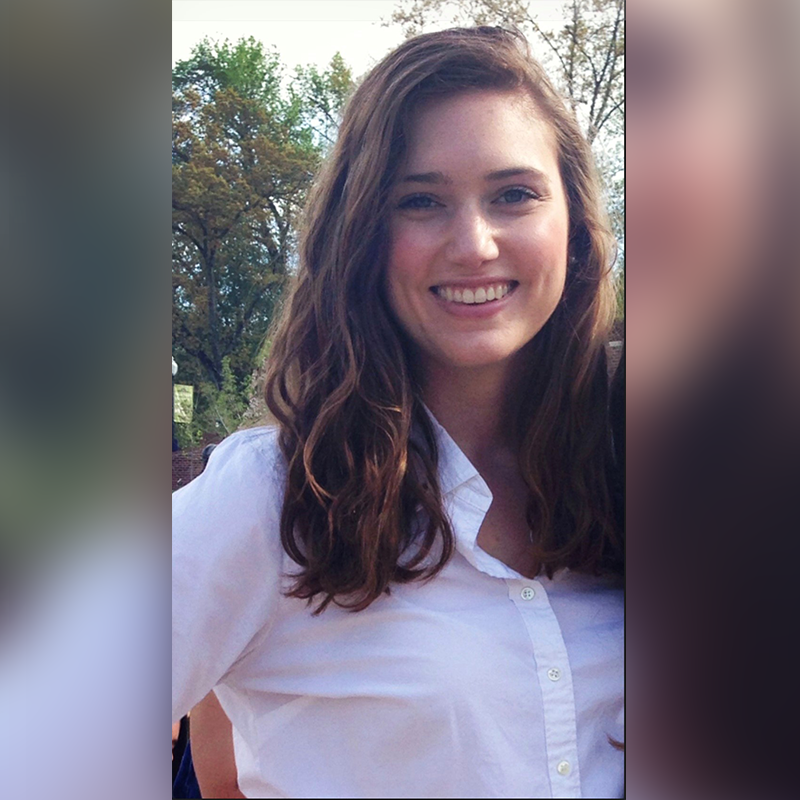
Interviewee Name: Tara Walsh, Waltham, MA
Interviewer: Fawn Boudreau, Amherst, MA
Date of Interview: November 9th, 2020, Via Zoom
Subject: Working in an Academic Institution (Boston University) during the Pandemic/ Covid19 surge
Fawn Boudreau: Hello, my name is Fawn Boudreau [spells name]. Where are you located?
Tara Walsh: I’m in Waltham, Massachusetts.
Fawn Boudreau: And I’m located in Hampshire College, Amherst, Massachusetts. It is November 9th, 2020. Do you give me permission to record your words and deposit this interview in the Hampshire College Covid19 Oral History Archive?
Tara Walsh: Yes.
Fawn Boudreau: Thank you.
Tara Walsh: You’re most welcome.
Fawn Boudreau: What year were you born?
Tara Walsh: 1992.
Fawn Boudreau: Where are you from?
Tara Walsh: I moved around a lot growing up. So I was born in California, Southern California. But moved around every 2-3 years. So yeah, California, Seattle, Washington, Connecticut, Ohio, New Jersey.
Fawn Boudreau: Where do you live?
Tara Walsh: Currently live in Waltham, Massachusetts.
Fawn Boudreau: What is your job?
Tara Walsh: So I am the senior development coordinator for the College and Graduate School of Arts and Sciences within Boston University. So with that, I essentially help with the fundraising initiatives of the College and Graduate School of Arts and Sciences at BU.
Fawn Boudreau: What is one thing that comes to mind first when thinking about changes that have occurred in your role as a senior development coordinator?
Tara Walsh: So the initial thing that comes to mind of when, you know, way back in March, when this new work-from-home policy was implemented because of the pandemic, my being a coordinator, I’m very much, so like the glue of my team. And so, communication and being in the office, it was easy because it’s just across the hallway. My boss or my co-worker could, you know, update me on something or ask me a question very easily. We didn’t have to put “formal meetings” on the calendar. Which is how we have translated to in this Zoom era. So, initially the communication aspect, the team communication and open communication, was the biggest thought process that came to mind.
Fawn Boudreau: Were you concerned at all when it came to the requirements that might be coming out when involving your daily tasks of your job?
Tara Walsh: I wasn’t necessarily concerned, no. I’ll leave it at that.
Fawn Boudreau: How did your colleagues in your job react to new protocols that your office put into place?
Tara Walsh: The protocols that the office was putting into place was kind of happening as we were moving and transitioning. So the reactions, and still to this day, are, I guess, little uncertainty. But I think, like communication-wise as a whole, not just my team, but like all through leadership coming down to us. It’s still lacking a little bit because senior leadership may or may not have this plan that they aren’t necessarily letting us know in a timely fashion. So my colleagues and I were, I don’t know, hesitant going off … very hesitant just because we’re not really sure what is to come.
Fawn Boudreau: Did you ever feel as though you could be at risk of losing your job position?
Tara Walsh: There was a point in time where yes, I was nervous of the possibility. Right now, I am no longer worried for a duration of time but I don’t know if this were to continue through next year and we go by the school years, so June … I’m sorry, July 1 through June 30th is considered a first school year for us. So if it were to continue past into next first school year, then those concerns might come up again.
Fawn Boudreau: Did you feel as though the office you work for was prepared or do you feel as though there was more pressure to get things in order?
Tara Walsh: So kind of going off what I was saying earlier, the office was not prepared at all. We did not have these Zoom accounts set up. We didn’t have, it’s called Microsoft teams. I’m not sure if you’re familiar with that but it’s another platform… that you can have either like one-on-one chats, group chats, team chats, video calls, meetings and all of these things. So all of this stuff was put into place as we were leaving the office and we didn’t have any work from home set up equipment. So literally, all my colleagues were bringing/unplugging their computers from their desk offices and bringing them home.
Fawn Boudreau: How has your home routine been since the outbreak?
Tara Walsh: Honestly I would say home routine has been thriving. The flexibility of and convenience of … working from home is nice. I feel like mental health wise it’s been better for me personally. You know, I’m able to go take breaks more often if needed but more also like strategically, can take work out, you know midway through the day. I can take my dog out for a walk, and it’s just been a little bit more convenient, I would say.
Fawn Boudreau: Would you say that you put any personal pressure on yourself when it came to like figuring out daily tasks while being at home?
Tara Walsh: Yes. So, initially — and I would have to say going back to the previous question of how was my work/home routine have been — initially I was really thrown for a loop, so I was not thriving at all. I was putting a lot of pressure on myself needing to essentially be as good as I am remotely as I was in the office if that makes sense. You know I wasn’t taking into account that we were in a pandemic, that this is not a typical work from home experience. This is working at home during a pandemic, so I was putting a lot more pressure on myself to get more things done and to do things even more perfectly and precisely than when I was in the office because I felt like I needed to prove that from working at home. But it’s gotten a lot better, communications with my supervisor have, you know, resolved all that.
Fawn Boudreau: Was there ever a point in time when you didn’t feel ready to go back to work? Or was there a point in time where you had a break from your job position …you all were trying to figure out different resources? Was there a point in time where you didn’t work for a bit?
Tara Walsh: There’s not been a point in time where I haven’t worked. I’ve been working at home since March 13th, and my department has slowly recently begun sharing news of possibly going back to the office in January. And at this point, I’m not comfortable going back in January. You know, if they provide a business purpose for us, like you know, like a true need for us to go because we are not student-facing. We’re not really, we’re not essential to students being on campus and essentially we would just be more bodies. You know, more of a risk I would say. So you know at this time, I’m uncomfortable with the possibility of returning.
Fawn Boudreau: Would you say that since working from home, do you feel like there has been a shift in your job obligations? If maybe your supervisors have required you to do more in your position than if you were in the office?
Tara Walsh: Yes, so the interesting thing about a coordinator level position at least where I’m at is that those other duties as assigned component. And so you know that we’re like the catch all’s so anything else that needs to be taken on “Oh let’s give it to the coordinator” right? So there has been some shift, some new duties provided to me just because of the entire department going remote for the time being. And other units within the department being shifted so that, kind of translated to school based development folks needing to take up more. I’m sorry did I answer that question or did I just go off on a tangent?
Fawn Boudreau: You answered it, yeah. I would like to kind of go back to what you were mentioning as far as the possibility of going back to working in person, are there other colleagues that have already been required to go back to working in person?
Tara Walsh: So at BU, and granted BU is very large right? So I’m talking specifically about my Department of Development and Alumni Relations. So I mean overall, BU staff, well, they were doing phases, phased rollouts. So you were either category one employee, category two, three, or four. Category 1 was started over the summer, but labs, or faculty who are “You need to be on campus.” And then, 2, I think was more like lab rooting, expanding more the classes. And then there’s more student-facing, so like residents, residential hall, like the career development center, who [are] student facing, student services those types of folks, right?
And Category 3, from what I understood, are staff who don’t really fall within those need-to-be on campus but for whatever home situations they have, they would prefer to be on campus. And then everybody else would be in category four. I, myself, am in category four, but I do have some colleagues who are Category 3, so they have been going into the office here and there. I think no more than twice a week and you know bringing up the possibility of more. Well, the entire department going back for those who are category threes and chose to go back to the office before everybody else, you know, one of the reasons that some of them have expressed them going back is because there’s not many people there already. So they feel comfortable, however, if more bodies were to come back they wouldn’t necessarily feel comfortable you know being exposed to everybody else, yeah.
Fawn Boudreau: Would you say, or the way that I’m trying to ask this question is like is there something you’d hope to gain if they did require you to go back to office? If it’s like a raise in your pay? If it’s being able to have like less hours throughout the week? What would you say would be a reasonable agreement?
Tara Walsh: Almost as like an incentive to go back?
Fawn Boudreau: Yeah.
Tara Walsh: That’s very interesting. You know you bring up pay increase and I mean that would be wonderful. BU is currently, they have a hiring freeze, so you know no jobs are being, you can’t apply to new jobs. We’re not taking on more, we’re not receiving more help. … Those who are currently working there, we’re not receiving more money. So what would be an incentive, I honestly, at this point, I couldn’t tell you just because I know that the possibility of providing us more money is not a possibility at all. So ..the only thing I could think of is be open and honest and like talk to us, like give us the reasons that ….We, has humans, would appreciate hearing rather than like a business corporate level sturdy robotic “Let’s go back because we need to”.
Fawn Boudreau: Definitely. We’ve talked about a lot of things. And I was wondering if there is anything you may want to add, something we may have skimmed over?
Tara Walsh: Oh I probably could go on a lot more and I know the answers that I provided. I could’ve probably elaborated on more so. I mean I would say I think I’ll bring up again that my department, prior to the pandemic, we were not really equipped to work from home. We didn’t have any … it was kind of frowned upon, so we weren’t even given the opportunity to work from home. So you know one thing that I think that is one positive out of this whole situation is that we’ve been given the resources, well, slowly been given the resources to make that a possibility. Even once the pandemic is over or once there is a vaccine let’s say. So I think there’s opportunity, yeah I’ll stop there.
Fawn Boudreau: Thank you so much for being a part of this interview.