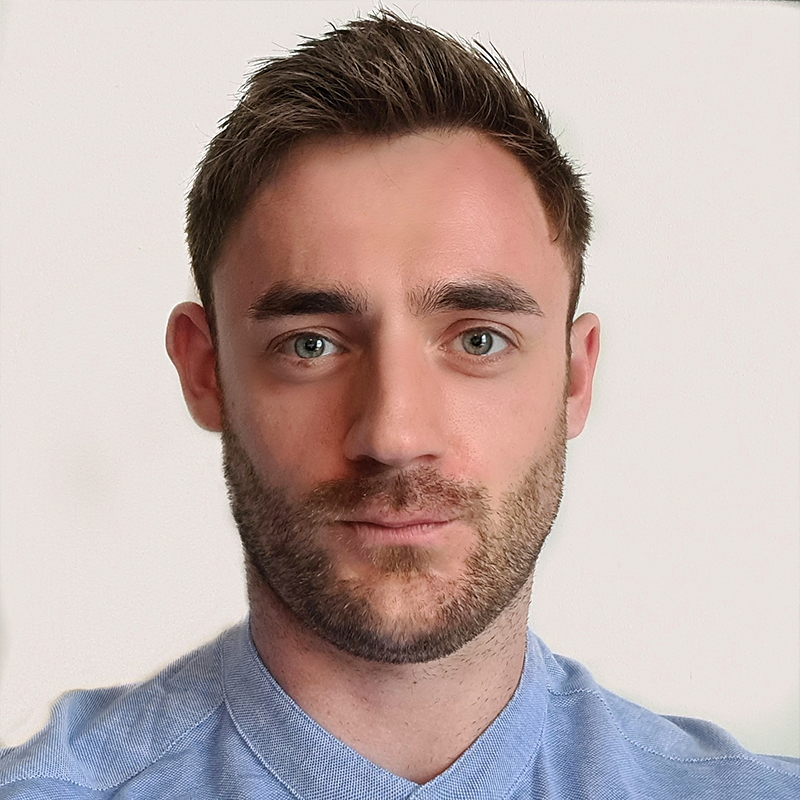
Interviewee: Luke Nuttall, London, England, UK
Interviewer: Robert Salladay, Amenia, NY
Date of Interview: October 14th, 2020, VIA Zoom
Topic: Experience as a Medical Worker during Pandemic
Robert Salladay: This is Robert Salladay. Today is October 14th, 2020, 8pm. I am interviewing Dr. Luke Nuttall for the Hampshire Covid-19 Oral History Archive. This interviewing is taking place over Zoom. The interview is being sponsored by Hampshire College and is part of the first year seminar, Pandemics. Where are you located now, Luke?
Luke Nuttall: Hi there, I am located in London, in the United Kingdom.
Robert Salladay: Right on. I’m over at my mom’s right now as I told you, in the States. Do you give permission to record … and deposit this interview in the Hampshire College Oral History Archive?
Luke Nuttall: I do indeed.
Robert Salladay: Awsome. And thank you for agreeing. Can you give me some basic biographical information about yourself?
Luke Nuttall: So did you say where I was born? So, I was born in London. I am now working close to where I grew up. At the moment, I am a pediatric specialist doctor. I’ve been considered in training. So compared to the Americas, I am not an attending. I’d be deemed, I’m not certain what that is, but I am a full time pediatric doctor. So that is the career I am on, but I have worked in adult medicine previously in my training. At the moment, I am working at a hospital called St. Mary’s Hospital, which is in London.
Robert Salladay:What are your daily responsibilities at work?
Luke Nuttall: So, at the moment I cover, effectively, I work within the Pediatric Department. I cover General Pediatric Ward. We have a Pediatric A&E. My hospital is what’s called a Trauma Center for an area of London. That means in terms of our emergency department, we get trauma cases. We have, any kind of significant injury in the area comes to ours. As well as that, my hospital, in the area of London, specializes in infectious diseases. So people within the wider area who fall into that category of unusual infections or atypical infections or things more broad quite often get transferred to our hospital. We also specialize in hematology. So we do things like bone marrow transplants. Kids with rare cancers often get transferred to our hospital. Day to day, I’m in one of those departments covering whatever needs to be, day or night, depending on my shift, that is.
Robert Salladay: Why did you choose to be a doctor?
Luke Nuttall: Well I think, from memory, it was a long time ago now. At school, I always leaned more towards the sciences. That’s what I was better at. So when there was that point in consideration of what I would want to study for further education at University, I remember just thinking I liked sciences but wasn’t quite keen on doing straight science. The idea of doing biology or chemistry, which in England, we straight away pick up an actual degree. … [but] medicine was a possible subject that required science, but had a nice human element to it. Dealing with people, working in teams. A bit of a combination. And then [I] did various work experiences when I was still in school. And I enjoyed it and I have enjoyed it and applied and ended up on that conveyor belt. And here I am.
Robert Salladay: You talked about it a little bit, but how did your work as a doctor change since the start of the pandemic?
Luke Nuttall: Yeah. So as I said I am a pediatric doctor, full time. So I work with children, or anyone under 16, 18, depending on the area. During some point, in April, May, at the hospital I was working at, various other specialties had transferred some of their staff to help on the general adult medical rotor [rotation?]. For example, the surgical team had to .. a lot of their staff had gone over because a lot of routine surgeries had stopped during the COVID, the pandemic. But as I said, at some point during the tour, I was asked to move back to Adult Medicine. I was then assigned to work with my hospital’s ITU team. That’s the Intensive Treatment Unit. Though I predominantly worked on what would be deemed a lot of places as a high dependency unit. So, kind of classified one level below ITU. Which during COVID, effectively were the patients who were not intubated and ventilated. It was either the most unwell you can be before … needing that or not being deemed suitable for a ventilator.
Robert Salladay: Has your daily routine changed during the pandemic. If so, how?
Luke Nuttall: Yeah so, as I said, when I was working in Adult Medicine, a few things changed. Clearly it was all a lot different because we, at the time, when I was doing that as a country we are in a lockdown. So, stopped all non essential, businesses were shut and people were encouraged to work at home. But what happened at work, clearly I’ve moved department, and that kind of shift pattern got changed quite a bit. Every hospital would have done it quite differently I’m sure and every department did it slightly differently, but I actually worked less shifts but longer ones. This idea being, because there was/is a concern about staff having it, or getting it, and then for a period when there asymptomatic spreading it. So we encourage work a long day and then have what would be two days, three days off, and then … work to that schedule with the idea being that if you were to be ill, you wouldn’t have been at work for three days before developing symptoms. So that kind of spaces out. Whether that worked or whether that was a good idea, I’m not entirely certain what anyone thought about it.
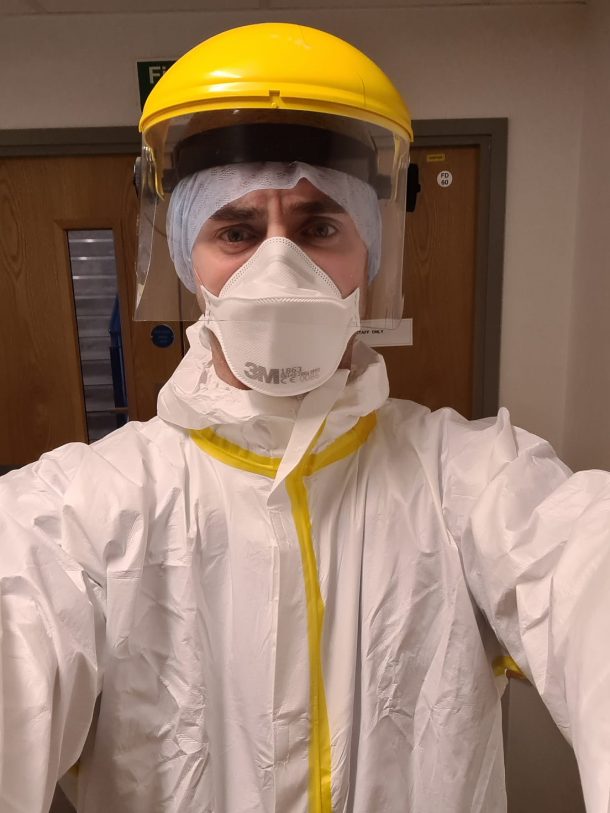
So that actually meant in terms of my weekly rate, working less regularly, a bit more intense while working in the hospital. Not only because, were quite busy to an extent, but also because where I was working was in full PPE. So also that at work when you’re in full gear and mask it’s all quite sweaty and uncomfortable and kind of changed out [how] we worked. Changed how we take breaks. Mainly because it’s a lot of effort to get changed and get unchanged, so we kind of stagger ourselves. But similar kind of work, it just changed regularly as the pandemic went on and new protocols were made and new ideas were had. So a lot of, every week, slightly different how we do things.
Robert Salladay: What has been a memorable moment at work while working during the pandemic?
Luke Nuttall: One of the most striking things with working during this pandemic, I mean, so … I am a pediatric doctor; I have worked in Adult Medicine, so I wasn’t hugely, not a lot of anxiety, going back to Adult Medicine. No more than anyone starting a new job because at my hospital, the Pediatric Department is quite insular. So working within the other department isn’t involving meeting a bunch of new people and new systems. The most odd thing which I think everyone felt during the Covid pandemic, which I don’t think will another pandemic happen again, is having to treat a whole bunch …My entire ward all have the same condition, which does not happen even if your a specialist kind of surgical unit, or for whatever, you have patients in the same category, not the same condition.
And then further to that because it’s a new disease to an extent. And, as I was saying before, every week, slightly different things on how we were managing it, we were pretty much managing all the patients the same as well. So, despite it being busy it was very easy .. because you didn’t have to think every patient I move on is checking their numbers. Are there numbers going the right way or the wrong way if not what can I do to change it. It’s the same thing, no little thinking to an extent. Which is very very odd and quite personal to the point where it’s a little tough to get to.
And then to compound that even more. Because it’s this highly contagious disease, I think rightly so encouraged, there’s no huge reason for me to examine them. Why listen to their chest if I can listen to their heart? I can generally see by their numbers how their breathing, how their blood tests are doing, how they are doing. So for a lot of the patients I really could, from a distance, manage them. Which I’’m not a fan of. It felt quite impersonal for the doctors and of course, the nurses and other specialties which require you to be more closely, so I think that was the odd memorable moment, but what strikes me is having a ward all with the same condition, all which you’re doing the same thing for. And you just kind of check whether it’s going to plan or not going to plan. It’s very unusual.
Robert Salladay: Did you experience the death of a patient under your care? If so, do you feel comfortable talking about it?
Luke Nuttall: Yeah, well, in medicine you generally, we have patients die, and that’s sometimes happened to me before. As then we definitely had, during Covid, there were, I suppose, higher deaths. I wouldn’t know the numbers. Yes, we definitely had patients die, especially working in this kind of high dependency unit. I think the hard thing about Covid was, yes, for the younger people, it was then sometimes normal, but still people didn’t always used to die in hospitals. I think the sad thing was a lot of people who’d come into the hospital for Covid, they tend to get ill around those 10 days. So you tend to have people who have been in there for a while and knowing that people were getting worse. It was quite unclear who would get more ill than others, that got better as time went on. And people understood a bit more about it and the tests involved. It seemed very random who would get unwell and die. I think that was always hard to deal with.
And then furthermore, to be straight about it. Because I was in a high dependency unit where effectively you have three options: you either get better, you either get worse, which in that case you get intubated and ventilated, or if you’re not suitable for intubation and ventilation, then you are what we all call “palliative.” The aim is to make you comfortable because we kind of expect you to die. And what was difficult during the pandemic, one big thing is we have a no visitors in the hospital. All nationwide, all hospitals did this, all children are allowed to have parents with them. No visitors, but then if you are made palliative, as in we expect you to die, then the hospitals would allow visitors, or one at a time. Especially during the peak of it, if you were an elderly patient, your partner would quite often be elderly. We would have family, who unfortunately, don’t want to visit because they are scared they will get it. So it’s hard for a lot of these people alone for a lot of their time, they didn’t have families with them. And further to that I think with breathing issues, it’s a disease that quite often would get worse after a week. So you’d have families who saw their relatives coming to the hospital walking, probably unwell, but so unwell. And then they’ve had daily updates that they got a little worse and a little worse and then are told that they are going to die.
So I think that it is very tricky, for people, relatives, us as doctors to speak to relatives, when they’re not in the room, you’re speaking to them on the phone, and they’re just getting updated about these things. I think sometimes you can see your loved one is unwell and reaching the end of their life can be a lot more easy to accept then, unlike on the phone. Or as I said, people are able to do video calls. For a lot of people, it could be quite a shock that their husband, their wife, their father, their mother who they last seen maybe a little unwell, who was going into the hospital is now going to die or going to be intubated and ventilated. There are a lot of different factors that made it a lot harder than I think patients normally dying in hospitals.
Robert Salladay: Do you think people would care more about safe distancing if they could see the way patients are dying?
Luke Nuttall: It’s a hard one because I think, now, we are reaching a time where we are COVID fatigued. It’s a decision of … It’s different for different people. I’ve gotten a bit muddled, but I think at the moment, in our current climate as of today, where everyone, our country… in England, we are about to start new restrictions. You can tell everyone is a little tired of it, so I’m not certain anyone would be easily convinced if they didn’t already feel that way.
Robert Salladay: Did your hospital reach capacity at any point in the pandemic? What was that like?
Luke Nuttall: Yeah, so I think my hospital … There were two issues. We never reached capacity. There was a struggle at the start in how we manage it. More so in terms of an organizational point of view. People understood it a bit better. We got better as you come into the the Emergency Department. You have A, B, C, you are someone to watch, you go to that room. So everyone is kind of grouped together. That’s one of the areas I ended up working in . THAT MADE IT EASIERY. The other issue my hospital had, we didn’t reach capacity, but we planned. THERE BEING MORE VENTILAOTORS. How do you decide who gets the ventilator? So we had to very …
Robert Salladay: Yeah that was my next question, did the hospital have adequate equipment?
Luke Nuttall: Yeah, fortunately in London, we have a lot of big hospitals in the area. So first of all, that actually meant, there was a very smooth system BETWEEN THE HOSPITLAS, transferring patients around FOR SPACE BECASUE THERE IS THAT SPACE AVAILABLE. I’d say the problem we had, or not the problem we had. We set all these rules of, to be intubated and ventilated, this is the tick box you need. You need to be young. BUT A effectively a criteria, because if there are limited resources, you want them to go to the people WHO will benefit the most from them. So we had these rules in place. And the problem that started caring once we were maybe at our peak pandemic is we never actually reached the threshold. We were never running out of ventilators. We were never a huge … vent space. But we still had these strict rules, because they were made in preparation.
Robert Salladay: Has your work as a doctor during the pandemic affected your mental health? In what ways.
Luke Nuttall: I think mental health is really interesting during COVID because like I’m saying, we’re having a group of patients who all have the same thing. The pandemic’s been a situation where most people, within reason, all have shared problems. Whether that’s not seeing your family, their friends, people having the same anxiety about either them getting it or their elderly relatives. People not being able to do the things they enjoy, whether that is traveling, or team sports. The difference being, I was always going into work, so I was always around people to talk to. And I think we have that situation where it was kind of understood that everyone was going through a bit of a rubbish time. Because everyone, especially at the hospital, does not have much going on at home, had to come into work, work can be a bit tough, a bit sad, with a lot of the unwell patients.
Robert Salladay: How are you learning to cope with your responsibilities?
Luke Nuttall: I think like anyone, I’ve worked longer, as if I worked more years, I got better at handling the problems that come back up. There’s always that phrase you know, you rack up some of your bad days doing anything, and then no day can be as bad as that day. It’s nice. I’ve been now turning back to pediatric medicine, which is a more familiar territory. But I think that during, as I said , when I was in adult medicine, the tricky thing I had about my responsibility was I was dealing with quite unwell adult patients. I don’t know how you would feel, at the end of the day, I am a pediatric doctor because if I make my plan for the patient who is 80 years old. And in many ways, people who are elderly are similar to children. But I think there’s some times … and I’m not just saying this for the interview .. I’m medically legally protected for working for adults or feeling a bit uncomfortable that I am the person that is kind of sorting these things out. These patients are different than my normal patients. I genuinely have very supportive senior doctors who help me learn, help me figure out how to deal with things better, and will be ready for the second wave of COVID and see if the lessons from the first time.
Robert Salladay: Talking about that, with an approaching winter and the UK seemingly entering a second wave of infections, do you feel your hospital is prepared?
Luke Nuttall: This is an anecdotal, my personal opinion on it: not at all. I do not understand what anyone has been doing over the summer holiday. We all wear masks, and I think a lot of things everyone’s ready for. But I think the actual logistics of some of these problems we’re going to have, have not been figured out. And I think a lot of them can’t be figured out because, for example, I know over here, all these ideas of one meter, two meter spacing and how far do you space out people? So, for example, I was working in our emergency department today. Our emergency waiting room, if everyone was social distancing, we could probably fit in five children with their parents. So that’s presumably — and I don’t know, we would work very fast to not have a lot of people in the waiting room, but I don’t really understand if it’s neant to be sacceptable or how they intend to manage that to reach their guidelines so everyone is spread out. Further, the problem we have with COVID, is it’s passed passed on through aerosol spray droplets. There are things called aerosol generator procedures. Things we can do, one of those is being intubated.
But a more realistic one is somebody, a machine that helps people breathe, that you can use on children as well, they generate, they cause that high flow oxygen in your mouth so things kind of come out in the air. Over winter, I mean last year, a lot of the children that come in the winter have breathing problems. So a lot of them will come in and we’ll put them on those machines and now if they’re on those machines, we’d have to be fully geared up. Which is fine, but I think, again, it’s a space thing. If we have to assume that every kid who gets swabbed positive, where do we put them? Where do we put everyone? I think it’s honestly going to be a bit of a mess. The problem, at least the first wave, happened spring, early summer. In the winter, everyone has a cold and everyone has slight respiratory symptoms. So it’s going to be a nightmare to manage all of them. But, I like to think that someone, somewhere, is sitting in many meetings trying to figure it out. But I think everyone is trying to do the best they can do to figure it out. But I think it’s a tricky, tricky situation with maybe no brilliant answer. I would ike to think someone is planning it but it doesn’t seem like anyone has figured out great plans or great ideas, let alone our government. We’ll see how it goes. As of today, we have pretty much the same numbers back at the start of the pandemic.
Robert Salladay: Thank you for this interview. I’m going to stop recording but you should wait in the call.