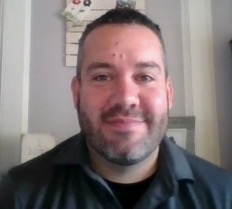
Interviewee: Patrick Waugh, Sturbridge, MA
Interviewed by Alexandra Bell, Wilbraham, MA
Date: October 10, 2020, Via Zoom
Topic: First Responders During the Pandemic
Alexandra Bell: Okay, this is Alexandra Bell. Today is October 10th, 2020. I am interviewing Patrick Waugh (spells name) for the Hampshire College COVID-19 Oral History Archive. This interview is taking place over Zoom. This interview is sponsored by Hampshire College and is part of the first-year seminar, Pandemics. I am located in Wilbraham, Massachusetts and we can start with the questions. Where are you currently located?
Patrick Waugh: Sturbridge, Massachusetts
AB: Could you please give me permission to include, both audio and visual formats, in the Hampshire College COVID-19 Oral History Archive?
PW: Yes.
AB: Thank you. What year were you born?
PW: 1988
AB: Where are you from?
PW: Originally North Brookfield, Massachusetts.
AB: What is your current occupation and how long have you been in the profession?
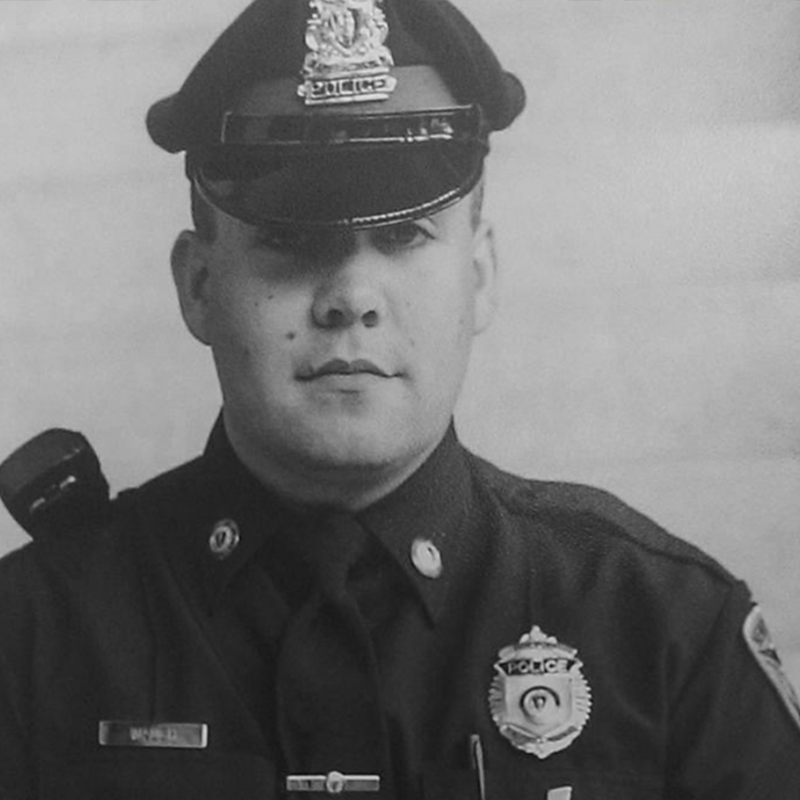
PW: I am a Police Officer in the town of Spencer and in the occupation a total, going on my 12th year.
AB: What led you to become a police officer?
PW: Wow, that’s a good question, I never – I don’t really know what steered me towards it. I come from a large family and … I have one person in my family that’s a police officer, my cousin. What steered me towards it is I think, I had friends that were police officers and some people that I looked up to that were police officers growing up. And that’s probably what led me to becoming a police officer. Yeah, it’s not like it was a family thing. Nothing really drove me to it. I did many things prior to being a police officer.
AB: What are your responsibilities on the job?
PW: Ah, it’s a lot. I feel like it’s a lot but. So, day in and day out, we’re responsible for our equipment, our cars, which I mean everything from the maintenance of our cars onward. We’re responsible for answering both 9-1-1 calls, responding to 9-1-1 calls, answering 9-1-1 calls and everything from a barking dog complaint to violent crimes. We’re also responsible for maintenance of the station and our areas, our desks. Reports, going to court, doing traffic violations, doing traffic laws and all that stuff. Medical calls, we go to medical calls. There’s a lot that we do day in and day out, it’s usually nonstop.
AB: And how has COVID-19 impacted daily operations?
PW: Well, it’s better now. When COVID first hit the area, it was very tough. There was nights where I would come home and sleep in the basement ‘cause I was afraid to expose anybody. There was nights where I was sent home early because of interaction we had with people, just ‘cause more of the fact we didn’t understand or know about the virus as much as we kind of do now. There was a fear, I mean … there’s times where I was thinking to myself, like why am I here right now? … Putting myself, doing my job just put other people in my life in jeopardy where that was never, you know, that wasn’t a case before. But now I’m going into houses or I’m going into calls dealing with people that may or may not have it, say they have it, or don’t have it and then having to bring that home around people.
So, it was a significant change in our work environment, a significant change. Just from cleaning – when I got into the station, I’d come in a half-hour early just to completely clean my cruiser. Which, the shift going out we’d have to share cruisers with, you know, the person before us, the person after us. Those cars get run 24/7 for the most part and I’d have to clean it. They would clean it after themselves, I’d clean it, before I left. I would try cleaning it, disinfecting it. And at first the supplies that we had, PPE, it was kind of sad and scary. I felt like before COVID, we were more prepared with our stuff. We ran out of PPE real quick. I was re-using the same mask for weeks on end, trying to air-dry it. I mean, it was dumb and probably not efficient or effective whatsoever the way were doing it but it’s all we had.
On top of that I went to the Dollar Store and bought every can of Lysol they had. And I would spray my area down, spray the car down, besides wiping it down. It wasn’t until May, June, that we started getting more supplies in. That includes hand sanitizer. I mean we were rationing hand sanitizer. Even before COVID, that was a must. We’d go into some places and go on some calls that [were] not always clean.
AB: And how has COVID changed the way officers respond to those 9-1-1 calls?
PW: So … like, any call we were going to, we would mask up and glove up going to calls. Problem is, that was also, you know, we’d get on scene, we weren’t driving around in our cruisers with the gloves and the mask on. We’d get on scene, we’d have to put gloves on, put a mask on and approach. Problem was, where we were going, they weren’t wearing masks or we’d have to ask them to put a mask on and sometimes that would cause confrontation, especially early on. It would cause confrontation, saying you know, “Do you mind putting a mask on? Do you have a mask? Could you put a mask on?” or asking someone to stay six feet away which, as a police officer, we try keeping our distance to begin with.
We’re taught and trained, you know, keep a distance from people just for safety reasons. But now you’re telling someone or saying, “Can you stay six feet back?” They would get offended by it and sometimes that would cause confrontations. One thing that the chief implemented pretty –- I wouldn’t say pretty quickly, but into it — was that if they had upgraded flu symptoms on medical calls, we would just have to stage outside and we’d only have to go into the house, say, if somebody was having difficulty breathing or there was some type of chest pain where we’d have to — there was a chance that they would have a rapid decline in health.
Other than that, he wasn’t making us. It was kind the same thing we used to do during flu season, was, he would keep us out of those houses just to try to limit the exposure. Which was nice, which was comforting to us that some of these calls we’re not having to rush in there and do CPR on someone immediately. It’s something that someone wants to go to the hospital and we’re just standing there waiting for an ambulance anyways, we’re going to stand in the room and have a conversation with these people. So it’s comforting to us. It might not have been to the patient, but it kept some of us safe.
AB: Do you receive additional compensation given the conditions?
PW: No, we do not receive additional compensation at all. I know that we had tried to receive compensation through out state-wide, but we didn’t receive anything. And I mean, it is what it is. We got a job to do, we put ourselves and we go to dirty houses and we go to sick people and places that we could catch anything, and it is what it is. It’s the job. I’m not looking for additional compensation.
AB: What are some experiences and/or stories you can share regarding working as a police officer during the COVID pandemic?
PW: There was a couple incidents where, you know, people – and it’s kind of sad and I understand there were probably … emotions probably got the best of them during this time but, you know, as a police officer it was scary. Police have a dangerous job. Well, it is, but at the same time, it’s a job and for the most part it’s not dangerous. We go out there, we respond to calls, we help people, but COVID was scary. I mean you go to houses and someone doesn’t want to go to jail that needs to go to jail and they would start coughing – not sick – but they would just start coughing and be like “You know what come ahead, come get me, I got COVID. You don’t want me in your cell, you don’t want to come near me.”They were trying to use that as a crutch to keep us from or think that just because they would start coughing that we would leave them alone or forget about it or something.
Unfortunately we still have a job to do and there’s many times where people we’ve taken into custody and people I’ve gone hands-on with and had to put hand-cuffs on and transported in the back of my car who didn’t have a mask. And at the time, we may not have had – now we have masks for anyone who gets in our cars or comes into our station has to wear a mask. At the time, we didn’t have that. And it was, you know, there was a couple nights where I – almost to the point that the first that I did first thing in the morning was go get tested or wait to see.
It’s nervous but people were trying to use it as, kind of a weapon to keep us away from them and they’d cough. We’d start approaching them, they’d be like “You better stay away from me, I’ve got COVID.” Or they would intentionally cough on us and that was, I mean, those were a couple incidents that were not okay. And again, me personally, my personal safety is one thing, but the fact that I could bring that to and pass that along to someone else was more frightening.
AB: Do you think that the pandemic will impact the police force and how you do your job in the long run?
PW: Yeah, I think – I don’t know if it’s going to be a – there’s a lot of people out there that are anti-mask and stuff like that. A lot of them think that the police are coming there and we’re going to arrest them for not wearing their mask or give them a ticket for not wearing their mask or something like that. Or God forbid, we don’t have our mask on. I’ve been sitting in my own car by myself and I’ve had somebody yell that I don’t have my mask on. Sure, I think it’ll change it for the better, I mean, better protection for us. Our stockroom is stocked with PPE, masks, hand-sanitizer, gloves. I’ve never seen so much in my life. It’s good, and we’ll have it forever now and we also got, which I’m happy about, because we have those electrostatic disinfectors. It’s like a wand-thing that sprays, and we can clean the cruisers now and each cruiser in a minute we can disinfect the whole cruiser and we can disinfect the station. And we never had that before so that makes me happy. There’s a lot of germs out there that I don’t want, to include COVID.
AB: What will the new normal look like for you personally?
PW: I think wearing a mask on calls is going to be something that we’ll probably be doing for a long time. My awareness -– besides physical violence — to health, my health, my personal health and being able to pass that on to someone, I think that’s the biggest thing that’s going to be the change for me and the way I go forward. Thinking about other people that I possibly could pass this on to or infect just because of showing up to work.
AB: So we’ve talked about a lot of things and I’m wondering if there’s anything you want to add, maybe something we skimmed over?
PW: I think everyone should just be safe out there and take it serious. You know, when I come up to you, don’t cough on me please, because it happens.
AB: Thank you for this interview, I’m going to stop recording but you should wait on the call and I will be right with you.
PW: Okay. Thank you.