
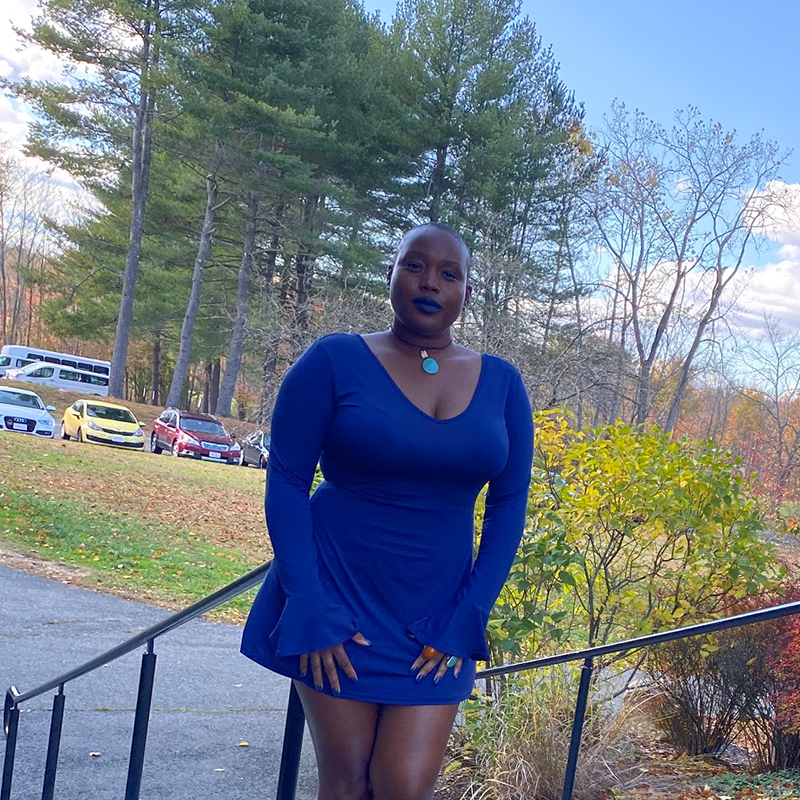
Interviewee: Judah Doty, Amherst, MA
Interviewer: Nancy Constanza, Amherst, MA
Date: October 9, 2020, via Zoom
Topic: Love in the Time of COVID19
Nancy Constanza: Hello, this is Nancy Constanza … So welcome Judah and thank you for being here.
Judah Doty. Thank you. …
Nancy: Do you give me the permission to record your words and deposit this interview in the Hampshire College Covid19 Oral History Archive?
Judah Doty: Yes
Nancy Constanza: What year were you born?
Judah Doty: I was born in 1983.
Nancy Constanza: Where are you from?
Judah Doty: I was born New Orleans, Louisiana.
Nancy Constanza: What is your occupation?
Judah Doty: I am a student.
Nancy Constanza: This interview is about Judah’s relationship during COVID19. Tell me about your boyfriend. How did you meet him?
Judah Doty: My partner is from Cuba and we met in Cuba.
Nancy Constanza: How long have you been dating your boyfriend?
Judah Doty: We have been dating for almost two year now.
Nancy Constanza: Before the pandemic began, what was the relationship with your boyfriend like? How often do you seen each other?
Judah Doty: Because he lives in another country, we saw each other about twice a year. We communicate daily throughout the day, but again we don’t have physical contact because we live in two different countries.
Nancy Constanza: When and how did you realize the pandemic had started?
Judah Doty: I think it was in March in 2020. There was news about Covid19. At that time, people referred to it as Coronavirus mostly. I didn’t really realize how the impact the virus would have in March. We were just told as students that it probably would be best if we left campus and went back home to our home environment as we didn’t know how rapidly the virus was spreading throughout our country. I left campus on March 18th to go to Georgia where my family lives. And then, I think for me, it was about the next month. I think about April or maybe at the end of March is when I realized this thing is bigger than we thought. It might last longer than we anticipated and also the realization that it was happening all around the world.
Nancy Constanza: Has not seeing your boyfriend affected your studies? If so, how?
Judah Doty: I think because we are in a long-distance relationship, it didn’t really affect us at first. Because again, we’re used to be apart and we’re used to kind of navigating what that means to see each other twice a year. But I think around August is when we realized like “Ohh, we aren’t going to see each other this summer,” and “Ohh, we are not going to see each other this winter” because we are not able to travel to each other’s country. At first, we were a little optimistic like “Okay, if everyone quarantined the way they should we would be okay, the numbers would be decreased.”
At first, it was like things would be okay by at least August and then, when August got here and especially for the United States, the numbers were increasing as opposed to decreasing. In his country the numbers were decreasing like, as now, they only have a few hundred cases, so their cases are not even in one thousand. But they are in a really strict quarantine in Cuba. So they have been in a strict quarantine since March. In the United States, things have been kind of last in certain places. I think in August is when we realized that okay, it looks like we are not going to see each this summer and right now, I think that our conversations are “Okay, it looks like we are not going to see each other this winter,” so it started to affect us. I think we are still trying to be positive about it but it started affecting us in the way where we are realizing that we haven’t seen each in a year. In December, it would be a year and this is due to the pandemic. If the pandemic didn’t happen, I would go to Cuba at some point in the summer and I would go again from December to January.
Nancy Constanza: Even if the borders hadn’t been closed, would you have visited your boyfriend during the pandemic? How?
Judah Doty: I don’t know. A part of me would say maybe I would go in chance because I would be in quarantine when I got there anyway. But the reality of it is that I wouldn’t risk being stuck in another country. I remember in March, April, even May, a lot of people who travel were stuck in places where they travel to. It took them a long time to get back home and so I think for me that’s scary. I think about finances: how I would survive in another country? I don’t have the finances to be able stay somewhere longer than the time I allow to be there. And so, that would be one of the concerns. That would be my number one reason of not making a decision if the borders were open. But I also think about the second reason: is to be a responsible human means sometimes making a decision that will be better for the world and not just a decision that would feel good for you. So if the borders were open and I was able to travel, would that make me feel happy because I am able to see my partner? Of course it would. However, if I’m coming from a place where our numbers are extremely high and I am going to another population where the numbers are low, then I am putting people there at risk.
I just tried to look at myself as being a responsible human and thinking that I would make a decision for everyone else and not just myself. I didn’t think I would make a decision to go if the borders were open and it allowed me to go until I knew that there was a kind of vaccine or numbers were decreasing rapidly especially in our country, because I think the numbers are different. It varies in different places. We have a great amount of cases and just wouldn’t put other people at risk, if it is not a necessity. It would feel good to be with my partner and to see his family but it is not a necessity. If it was an emergency and I needed to be there then I probably would make that decision but not right now. Do I miss him? Of course I do! Would I like to be there? Of course I would. But right now, it’s just a time to stay put and try to stay out and see what happens.
Nancy Constanza: What is your opinion about the closing of borders?
Judah Doty: In terms of the borders being closed and people not being to travel to different places?
Nancy Constanza: Yes, right.
Judah Doty: I think it is a decision we had to make in order to try not to alleviate the problem but minimize the problem as much as we can. It’s a tough decision: it’s hard, we are free people, we are free, wild, so we are able to make decisions in go places and vacations and do all of those things. So it is hard to have someone to dictate to you that you can’t do something. That’s hard. But right now, our world is suffering: we have a great number of deaths in the United States. 200,000 people have died because of Coronavirus. Not 200,000 people were infected but they actually lost their lives to this virus. It is impacting our world and our society in ways that I never imagined I would see in my lifetime. When this first happened, I thought we were in some type of movie. We are walking around with masks on. We have to quarantine in our homes. Things are closed, you can’t go to the movie theater, you can’t go to the mall, you can’t sit down in a restaurant and eat. Like, I would never imagine that this would happen. It really felt like we were in some type of movie, like an apocalyptic movie that is the end of the world.
However, because we are in this moment right now and we have to think about what is best for humanity; in order for us to decrease the number of people that are losing their lives because of Covid19. I just think there is a necessity right now. It is a necessity we stay put, it’s the only way for us to kind of curb what’s happening and so does it suck? It really does, it sucks that I can’t travel. For my academics, I wanted to study abroad. That may not happen for me. I feel bad about that, but I would feel even worse if more people continue to die because everything is open and we are able to travel and move around in the ways that we would have if we would not be in middle of a pandemic. Some things have to change in order to curb this. Some things have to change. It’s unfortunate, it’s hard, it’s frustrating, and it’s unbelievable. It’s really unbelievable that this is happening but I think there are some necessary hard measures that need to be taken in order to ensure that we can decrease the amount of people that are being infected and especially the amount of people that are dying.
Nancy Constanza: Does the pandemic affect you emotionally? How so?
Judah Doty: I had a moment where I was affected emotionally because I have an aunt who has a number of underlying health conditions and she was hospitalized for about six weeks between April and May. She was in an ICU: she was on a respirator and it was very scary. Not only because she was in a hospital, but she made close contact with my grandmother, who is older and a part of the vulnerable population as well. Thinking about if my grandmother was at risk … Also thinking about my aunt who was hospitalized and truly fighting to recover so that she could get back home. That was scary for me. The other part of it was knowing that the family couldn’t see her, she was alone, you couldn’t visit her in the hospital, I think that was the moment I was scared and I think I realized how devastating Covid19 could be, how devastating this virus could be for individual who test positive for this virus. Once she was better, I think is when I took it really seriously and really had to make a choice to not interact and engage with my family who lives in Georgia. I was in one city in Georgia, but my entire family is in Atlanta and I stayed in Augusta and I wanted to see them. It was hard but I made the decision not to travel back and forth because again I have a mother who has underlined very much [that] she is part of that vulnerable population. And just it wouldn’t be fair for her if I came from one place to another just to her.
I have a lot of young children in my family as well. I do not find myself emotionally sad all the time. There was that moment in the summer from April to May where it was really scary for my entire family. I think we were a little shocked; it shocked us. We decided that we just to stay input, quarantine, and be bored because it’s just how you make a decision that can impact your society in a positive way. And what we decided is that it is better for us to stay put. Also I think another huge part of being emotionally healthy is that my brother is an epidemiologist. He is currently working — and has been since the news of Covid19 — just doing a lot of research especially in the state of Georgia, kind of keeping us updated. Also holding us accountable for the choices we are making. I remember — this was probably on August — when I first came back to campus: I was Facetiming with him and I had my mask on but I was leaving, out of the car, and he was like “Hey, where is your hand sanitizer? You need to put your hand sanitizer on when you get out the car, before you’re going into the store to get the things that you need.” It’s just things like that like reminding me, holding accountable, so that I can make decisions that can decrease my chance of catching the virus but also making sure that I am keeping myself and others around me safe.
Yes, I did have a moment of being very sad, concerned, and worried about this virus because it hit home. But then I think what changed for me is thinking about what I can do to ensure that I am saving the people around me that has caught me in a more positive space because I know that I’m doing my part. I would feel guilty if I knew that I was making different decisions or traveling to different places. Because yes, borders are closed in certain places, but in certain places, they are not. So I can literally buy a ticket and travel now if I want to. Knowing that I have the ability to do something but I am trying to make sure that I am making decisions that can at some point hopefully curb what is happening in our society right now.
Nancy Constanza: What have been your best methods to make your relationship work?
Judah Doty: I think holding each other accountable, making sure that we are not looking at this from a negative point of view. I think that’s the thing: talking about how we feel, talking about how it sucks, not just thinking like okay this is happening, it would be okay. But talking about what if we be like this for the next two years and how sad this is and how bored we are. My partner in Cuba, things are truly closed, restaurants are not open, clubs are not open, movie theaters are not open. The only things that’s open are essential things: grocery stores are open, there are certain occupations and jobs that are open, hospitals. But a number of businesses there are closed. The beaches are closed. For him, it is different from here. Here restaurants are opened, we can go to the beach, we can go to lakes, we can travel from state to state, I have a little bit more freedom and choices in what I am doing on a daily basis, as where he doesn’t.
The one thing for us is just speaking honestly about what’s happened but I also think the other is just trying to stay positive and be happy, tell jokes and try to keep laughing and looking at ways to make the best of the situation. I think that is the one thing. So you always wanted to exercise, now you have a chance to exercise! Your grandmother wanted this to happen in her home and go do this for her. He was able to help his stepdad build the room for his sister something that they wouldn’t be able to do if we weren’t in the pandemic because life, busy working and dancing and all of the things they do. But now they actually have the time to do this, thinking about what can you do, to number one, past the time, number two, check out things of your list you always wanted to do, you didn’t make time for.
One thing he talks about is that he is an electrical engineer. His job is considered an essential job. He is able to go to work every day. He actually just mentioned this to me the other day that he feels grateful that he is able at least get out to work five days a week. Because he has a lot of friends work in like the restaurant industry and they don’t have anything to do and so they are bored. They are trying to find ways to keep themselves occupied. For him, he is like, “At least I have my job and I am able to go to work five days a week.” Just trying to be grateful in this moment, trying to be happy, trying to make each other laugh but also speaking to the frustrations that we are experiencing because we are in the middle of the pandemic and keep communicating. We talk all the time so that’s what we are just doing. Sometimes it is annoying: “Leave me alone, I’m busy, stop texting me, stop calling me” but keeping that consistent, we just talk all the time.
Nancy Constanza: Do you think the relationship with your boyfriend has changed in some way because of the pandemic?
Judah Doty: I don’t think so, we have a long-distance relationship — that’s what it is anyway. We are used to being away from each other. I think the only thing that’s changed is the realization that in December, it would be a year since we haven’t seen each other. No, in January, it would be a year. I think that’s a change that we are going to be able… one of the things we always say that possibly could affect our relationship is distance, not being able to see each other. This time is not extremely trying but it is a test because there is nothing we can do about seeing each other. I think at some point I feel like I wish I would be there, I want to see him, all of those things.
I think trying to remain positive and trying to remain strong in this moment because that’s the one thing that both of us had mentioned would kind of deter us from not being in this relationship as the distance. Right now, we are fighting with distance because there is nothing we can do about. He can’t travel here, he can’t meet me in Jamaica, I can’t go to Jamaica, I can’t go to Cuba, he can’t come here. So there is nothing we can do in this moment but sit and wait until things turn all right and the unfortunately things that we don’t know when it is going to happen, we just don’t know.
Nancy Constanza: In terms of love, what’s the best thing that ever happened to you during the pandemic?
Judah Doty: That is a good question. I think for me, I’m able to see the sacrifices he makes for his family. I think I am looking at him as a… I always knew he was an extremely caring person and family-oriented person but, because of this pandemic, I am able to see in little ways how caring he is and how selfless he is. That’s been very good for me, I can’t say for us but for me it’s been really good to see him in this light and self- sacrificing life. I think that’s really good. I also think one of the beauties and one of the things I had being joy is the opportunity to talk and really think about the future. And thinking about how this had made us realize how like saving money is important and maybe changing how often I go to Cuba. I can understand not seeing each other for a year, it is essential.
For me to visit them twice a year is expensive on both of our earnings. Maybe to change the dynamic of our relationship where I am only visiting there once a year. I think like that’s been a great thing. The other part for me is also realizing that, you know that this is a person that I love. I am okay with ending the relationship because of distance. That’s important to be able to not only have a partner and communicate with your partner but being able to see them and if it affects us in a way where we feel like we can’t do this anymore, I think the beauty that I have realized is that I am okay with walking away and I will feel really good about it because we have kind of bonded in a way that… I don’t know, who knows? We always have these end up conversations anyway. But I think again because of the pandemic it has made us realize how there is more that we can do for our families, there is more we can do for ourselves. To take time out to do the things that we always wanted to do but we don’t insert into our daily lives and so you know both of us feel in like if this is too much for us, if the uncertainty is still, still here and present next year in terms of travel that we are okay with saying this is just not mean for us to be in each other’s life in this romantic capacity. I think that’s a beautiful thing.
So other people it may sound like “What?” You are actually talking about breaking up but it is beautiful because it’s been honest and is also realizing that sometimes people are in your life to teach you different things and to provide you something in that moment. And it may not last a lifetime and being okay with that and finding the joy in that. I think that’s a beautiful thing for me. For me that’s love and that’s something that has been positive that we have explored throughout this pandemic time.
Nancy Constanza: We’ve talked about different things. I’m wondering if there’s anything you want to add? Maybe something we skimmed over?
Judah Doty: I think in terms like relationship and love, this is a time again people make different choices. So there are people out in our country right now who are meeting each other online and deciding to meet each other in person because we have free while we can. But I think this is a time where if you are engaging in a romantic relationship or trying to pursue someone this is a beautiful time just to talk, just to really get to know someone we have the opportunity to engage and dialogue in creating ways that we wouldn’t thought about before, I think that’s one of the beauties. Again it sucks. I am not saying that like this is the like optimal time to be in love, no.
There was upon a time earlier this year January, February, where you may be out of the grocery store you may see someone you like, or you are at the movie theater, you are in the mall, you’re in a restaurant you can actually see that person’s face. Even if you are out now, they have a mask on. You really can’t tell like are they smiling at me, you don’t really know. You just assume … We don’t really know we are not able to see each other’s faces. I think that is kind of hindering like face to face, or I look at this person they might look good. Let me talk to them. You don’t really know if they look good or not. There is a mask on! You can see a part but not their whole face. If people are choosing to engage in romantic relationships I would say the thing about this time — quarantining and being in middle of the pandemic — it allows us to communicate and have conversations and get to know each other in a deeper level. To take advantage of that, I think, it’s a beautiful thing in these moments. I also think being creative in dating my partner and I had to continue to be creative and how we are going to celebrate each other’s birthday.
The number of times we are doing Facetime per day has increased for sure. Just thinking about ways of being creative and also finding the space and the time to truly communicate and make deeper decisions. I think this pandemic lends itself to that if we choose to take advantage of it in that way. I also think this is moving from the romantic effects on the pandemic. But also thinking about how historically, people of color have often suffered in moments like this. Making sure that as people of color we talk about our existence. Also that we make good choices to ensure that we are not one of those numbers who have passed away because of this virus. Speaking to the reality of how being a person of color in the middle of the pandemic, we are automatically vulnerable. We don’t have underlying health conditions but because of who we are, because of systematically pressure, we are vulnerable in this moment. So really trying to uplift one another, educate one another and making sure we are making the best choices to survive this thing.
We want to survive because historically we do not do well when it comes to things like this.How we do encourage, support, uplift each other so that we could truly be survivors? I think that’s something that my family and I are really trying to implement in our daily lives as we think about ways to curb what’s happening. You know, my mother is a daycare school teacher and she made the choice to keep my two brothers at home. It is not the easiest thing to do. She’s a single mom, but for her to decrease the risk of her bringing the virus home to my brothers and of them bringing the virus home to her, that’s a decision that she made.
My sister and my brother in law — the same thing. They have children and both of their children go to school and daycare. They have made a decision, self sacrificing decision to keep them at home. I have another brother who has two school-aged children. He and his partner made a decision to keep them at home. I think about how again, historically people of color are placed in vulnerable situations because we don’t have access to a number of things. How can we make the choice to ensure that we are keeping our family safe?And this time has been critical for my family. I think keep encouraging people around me to make good choices to ensure that we survive this thing.