
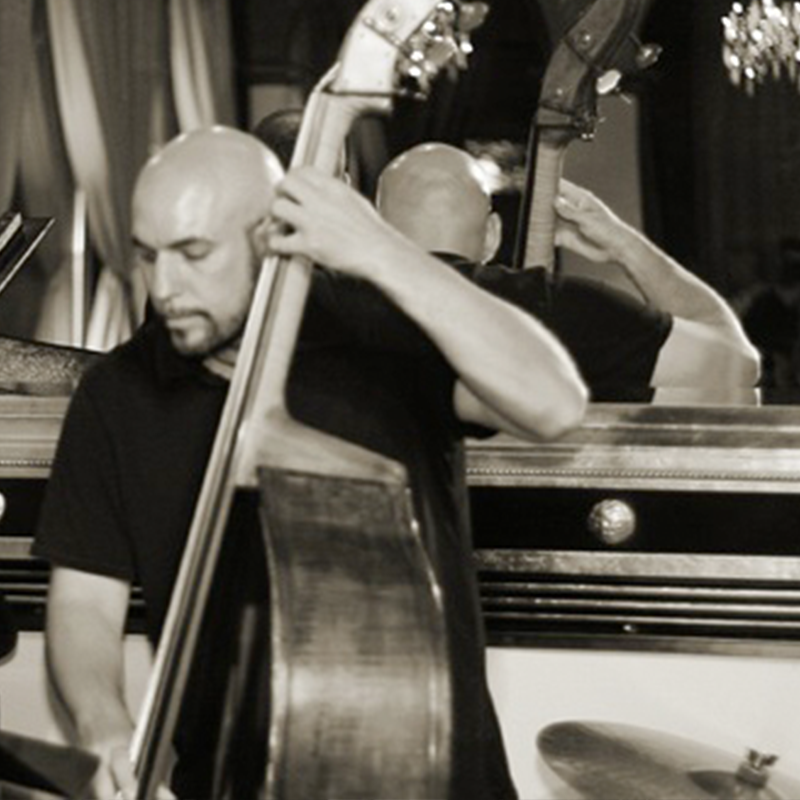
Interviewee: Steve Skop, Millis, MA
Interviewed by Isaiah T. Brown, Amherst, MA
Date: October 12, 2020, Via Zoom.
Topic: The Arts and Creativity during COVID19
Isaiah T. Brown: This is Isaiah T. Brown. Today is October 12, 2020. I am interviewing Steve Skop for the Hampshire College COVID-19 Oral History Archive. This interview is taking place over Zoom. This interview is sponsored by Hampshire College and is part of the First-Year Seminar, Pandemics. Mr. Skop, how are you?
Steve Skop: Good, how are you?
Isaiah T. Brown: Very good! Your full name please, and spelling?
Steve Skop: S-t-e-v-e S-k-o-p.
Isaiah T. Brown: Do I have your permission to include your interview, both audio and visual formats, in the Hampshire College COVID19 Oral History Archive?
Steve Skop: Yes, you do.
Isaiah T. Brown: Thank you very much. Mr. Skop, how old are you?
Steve Skop: 54.
Isaiah T. Brown: When were you born?
Steve Skop: July 4th, 1966.
Isaiah T. Brown: And where were you born?
Steve Skop: Troy, New York.
Isaiah T. Brown: What is your current location?
Steve Skop: I live in Millis, Massachusetts.
Isaiah T. Brown: What is your current living situation?
Steve Skop: I live with my family — my wife, two daughters — Sofia and Arianna — and my dog, Luna.
Isaiah T. Brown: What is your job?
Steve Skop: I work as a musician and a music teacher.
Isaiah T. Brown: Where do you work?
Steve Skop: So, I have a private studio that I do lessons through. And then I also teach at Anna Maria College in Worcester and Thayer Academy in Braintree. And then as a musician, I do gigs all throughout New England.
Isaiah T. Brown: How many years have you worked at each job?
Steve Skop: As a musician, I guess since 1990… late ’80s. So that’s 30 years. As a music teacher, well, I’ve been teaching privately about the same. And Thayer Academy, I’ve been there about 21 years and Anna Maria, I’ve been there about 15 years.
Isaiah T. Brown: Very good! What does a day in the life at the Skop house look like during the pandemic?
Steve Skop: We’re all doing our own thing. I’m pretty much at school every day. I teach one day a week at Anna Maria College and four days a week at Thayer. While both schools have different set-ups, Anna Maria is in session full from August until Thanksgiving, and again I’m only there one day a week. Thayer Academy is hybrid, but I’ll be teaching — or I am teaching both cohorts — so I’m there four days a week. And my wife works as a counselor and she sees clients remotely. And my kids go to different schools. Sofia goes to Thayer Academy with me and she goes every other day. Arianna goes to the Carroll School in Lincoln. She goes twice a week now, she was going twice a week, the other days online, and now she’s going twice a week, three days online. So we’re all kind of moving around, back to driving all over the place, but we’re home at night. That’s nice.
Isaiah T. Brown: What steps does your household take to reduce the risk of infection?
Steve Skop: We try to follow regulations put out by the state and by the CDC. We wear masks when we leave the house. When we are in public, shopping, going for walks, going to parks, hiking, and then we’re always washing our hands and hand sanitizer. So, we’re pretty strict with that.
Isaiah T. Brown: And how do you and those around you feel about contracting the COVID- 19 virus?
Steve Skop: We’re of course concerned about it. No one really knows how it’s going to hit you. And we have some immune issues in our family and our extended family. So, we try to be very careful and we take it seriously.
Isaiah T. Brown: Very good. Since most of your family is home during this pandemic, what benefits have come from you all being home together, if any?
Steve Skop: As I mentioned earlier, we’re all home at night. So we’re spending a lot more time together. When this first came into play back in March, you know, we were just isolated, just us, and it was really nice to spend a lot of time together. You know we still have work to do. The kids were going to school online and I was teaching online. We were learning new things, new ways to adapt, but we still got family time. We started a Thursday night movie night, spending a lot of time outside. Really using our outdoor yard area more, especially when we started seeing people more. But most of my teaching now is during the day. I used to teach during the evening. I have, as I’ve said, a private studio at home and I would see students for assembly until nine o’clock, 9:30 at night. And while it was great to be home (I’d still see the kids), I was still working. Now I’m usually done by five or six o’clock. With some of the public schools also on hybrid schedules, I can see my private lesson students during the day. Sometimes if they happen to be home working instead of being at school, so I can kind of see them on my off times while I’m at school. So that gives me, again, more time. So … by five- six o’clock, I’m ready to go with the family, have dinner, watch movies, watch TV, help them with their homework… although that doesn’t really happen that much cause they don’t need my help. So anyway, a lot more family time. That’s the biggest plus.
Isaiah T. Brown: Very good. You mentioned that you are a teacher. What aspects of your job as an educator have changed due to the pandemic?
Steve Skop: A lot. Scheduling is a big thing that’s changed. At Thayer Academy, they went to a rotating schedule. They used to have Monday through Friday classes. Now they’re on a cohort schedule, so it’s a five day cohort, but it’s over ten days because they’re cohort one, and then one B. Then two A, two B. So it’s a ten day cycle. And then within that, the classes change. So, I may see one class at 8:00 in the morning and then the next time I see them it may be 2:00 in the afternoon. So my schedule is very confusing! And then very often I’ll walk into a class and have no idea who I’ll see until I get there. So that part’s changed.
There’s a lot of cleaning. We’re all wearing masks. They’ve given us fifteen minutes in between classes to clean up. So myself and students sometimes help. We just clean the area. So that’s changed a lot. I’m still seeing private students remotely. So that’s different than it was last year. Yeah, it’s just a new environment. And I don’t know how it’s going to work for the future. I see some benefits to it, you know. I’ve always offered Zoom lessons, but I have more students taking advantage of it now and hopefully more will in the future.
Isaiah T. Brown: So talking about your students and attending classes, how have your students adapted from taking in person classes to online classes?
Steve Skop: So mainly, right now, it’s just my private students and they’re doing great. We’ve had a lot of success doing private lessons. There are some things that you can’t do. I can’t physically take their instrument and say “Oh, play it this way,” or show them, but I can show them online. And I would say the benefits outweigh, you know, the loss from being in person. So those students have adapted well. Some students have dropped, but others have kept up. Matter of fact, there’s less cancelations, because sometimes students would cancel because they couldn’t get a ride to my house for a lesson. Now, we just change the time if they need to. So that part is going great.
As far as classes, most of my classes are live. However, in the Spring, we went from doing ensembles that were focused on an end of year performance to doing recording projects. So in the past we would work all semester and then we’d have a concert at the end of the semester. And this year is the same thing. We’re not having a concert. So things are a little bit different. But last year we did a recording project and that was great. So they got the experience of being in a recording studio. They would record their parts at home, send them to me, and I would mix them together.
This year, at Anna Maria, instead of doing a live concert at the end, we’re going to do a recorded concert, but not as many songs. So we might do one, maybe two songs, instead of six or seven. So we’re focusing more on technique, improvisation, more musical ideas than worrying about getting a bunch of songs together for a concert. And also at Anna Maria, our jazz band would be called upon to play things like President’s Dinners, functions around campus. So beginning of the semester we would hit hard, learn a bunch of songs, and then we’d start working on more improvisation and things like that throughout the semester.
This year, we’re really focusing on more of the other aspects of music. And at Thayer, same kind of thing we’re sort of recording concert at the end. It might be a combination of having all the kids on the stage together or doing those little boxes when everyone’s playing their own instrument, you know, that you’ve seen all over the Internet. That’s to be seen you know, we’ll see what happens. But yeah, I think the students have adapted. Right now, the ones that are back in person are just happy to be back in person playing live. While recording sessions were a lot of fun and something new, there’s nothing like sitting next to — well, six to ten feet apart from the person — but you know, reacting to what someone’s playing. So, anyway, I hope that answered the question and wasn’t too long.
Isaiah T. Brown: Yes! No, that was awesome, thank you! And actually, to touch on that. You briefly mentioned the six to ten feet social distancing. In your classroom, how are you implementing socially distant guidelines to ensure that your students and yourself are being safe?
Steve Skop: So at Thayer, they moved from a smaller room and they put me in the auditorium. So now I have the entire stage. Everyone is spaced apart. We actually put tape on the ground so that we know where everyone needs to be seated and we just stay in those spots. Everyone has their assigned seats. They sit there the whole semester and I discourage them from getting up and talking to each other, you know, we try to keep that distance the whole time. Occasionally someone forgets, but you know, that’s my job to monitor it. Constantly reminding students to keep it up over their nose. And then we do a lot of cleaning, you know, the students take part in that as well.
So it’s going pretty well. And at Anna Maria, I’ve always been in a big room but instead of having everyone on stage, we now use the entire room. So I have the rhythm section, like the piano, bass, drums spread out on the back of the stage and then throughout the room I have put chairs for the other instruments. None of the classes are bigger than eight people. Matter of fact, many of my classes at Thayer only have four. At Anna Maria I think we have six or seven. So it’s not too bad, but some of the students come and go during the rehearsal. So I think at one time there’s no more than seven.
Isaiah T. Brown: Very good. In regards to COVID- 19 and its relation to the schools, what’s your opinion on the education system reopening schools as of recent?
Steve Skop: I think they need to take their time and really see what’s happening with this disease. You know, I think rushing into it is a mistake. I know there are a lot of people who want to send their kids back to school, and you know, I hope the schools don’t cave you know. For one thing, if a kid gets sick, they might not show it but they’re going to bring it home to their parents and extended family and that’s where it’s going to hit the most. And I think we open too soon, too fast, it can get worse and we’ll have to shut down again. You know, we take it slow and steady, maybe we can beat this thing.
You know even the hybrids, people were concerned, and you know even though we’re going hybrid at some of my schools, I’m still there every day. I teach middle school, I teach upper school, teach high school. I mean at college too, but I’m very careful that I don’t get close to students and I’m taking a lot of precautions. And I believe the teachers at other schools are doing the same thing. So I think as long as we take it seriously and go slow, we’ll be cool.
Isaiah T. Brown: So you’ve mentioned several times, and at the beginning of this interview as well, that you are very much involved in the music area of your life. What types of music performances do you do?
Steve Skop: Right now, I am doing outdoor concerts and then I’ve been doing some recording sessions. The outdoor concerts have been at libraries, I did a concert at Patriot Place down at Foxboro, some assisted livings, just various places. I have gotten called for indoor concerts or venues, you know, where limited population. But if it seems risky I just decline, you know. So it’s really cut down on the amount of playing that I’ve done, but again, being safe outweighs … the money will come. And the recording sessions have been great. They’ve been socially distanced. Those are in enclosed spaces but there’s no audience. I did a classical recording session where all the strong instruments were separated and the wind instruments were separated by plexiglass. And I actually have another concert like that coming up and I believe it’s going to be a live stream event, and they’re doing the same thing on stage. I’m not sure. If they have audience members, they’ll probably be very limited. But the last concert they did was just a live stream. So just taking precautions, not taking everything, but I’m doing live recording stuff, so that’s been fun. And some of the recording stuff has been in the studio and other recording things have been home. Someone will send me the tracks and I’ll record it here on my recording software on my computer and send the bass part back to them. So it’s been unique, and actually I think it’s opening up some doors for different opportunities in the future, whether I’m teaching remotely or playing remotely, you know it’s- we’ll see what happens. Technology, I think everyone’s getting more used to technology. So, yeah.
Isaiah T. Brown: What type of instrument and music do you play?
Steve Skop: So I play bass. String bass and electric bass. Here’s my strong bass behind me and electric bass guitar. And I play just about everything. My true love is playing jazz, but I do classical. Matter of fact, the recordings I’ve done over the last couple months have been everything but jazz. I did a classical recording back in July. I did something for a friend on a heavy metal recording. I just did a pop recording not too long ago. I recorded this week with a singer/ songwriter who does more country/ folk music. I’m doing a Christmas CD this week in the studio. So it’s a little bit of everything. So that’s the beauty of playing bass: it’s in every type of music you could think of.
Isaiah T. Brown: So, in terms of your performances, how are your live performances now different than that of pre- COVID era?
Steve Skop: Live performances now, as I’ve said, are pretty much outside. They’re trying to limit audiences. Some venues are asking us not to even promote it and they’ll just get people who come. They’re asking people to wear masks. I wear a mask all the time, even when I’m on stage. Some other people don’t, that’s their choice, I just try to take care of myself and be aware of others around me and you know, do what I’m supposed to do. Audience members, sometimes they get a little close, but generally everyone’s been pretty good about staying apart. You know in the past, it’s been about how many people can you get to come see you play. It’s not the case anymore. It’s just, you know, play and people are happy to see live music you know, and do something different. So, I can say, the crowds have been the biggest difference.
And not personally, but I’ve seen a lot more performances. I have a friend who performs every Friday night. She does a concert online and she puts a virtual tip jar out and she’s been making money doing it that way. So for her it’s been terrific and she’s connecting with people across the country or across the world. I’ve seen performances of friends that I work with do live performances with people from other countries. It’s very hard to do a live performance over the Internet because there’s latency. It’s hard to hook up, but if you do it enough, depending on the style of music, it can be done. They were playing some jazz that might be a little freer and allow for some time differential. But there’s been some really unique things. I’ve seen another guy who does a world tour, and every week he has a different background or a different country, and he plays guitar. And again, he puts out a virtual tip jar. So there’s been some real creative, I don’t know, creative opportunities taken advantage of through this whole pandemic, so…
Isaiah T. Brown: Are there parallels between your music career and your teaching career that you’ve noticed? Any similarities or any differences that you would find worth noting?
Steve Skop: I would say the biggest parallel is that technology is playing a bigger part in both. And I think there’s going to be some real advances. As I’ve said, I’m doing more recording at home, which is something I’ve wanted to do more of anyway but just didn’t know how to do it- now we’re kind of forced into it. I’ve had a lot more students want to take lessons through Zoom. And I can make myself available to students across the country just as well as I can do a recording session with someone in California. I can’t physically be there, I can do it over the Internet. So I think technology plays a role in both and I think that’s one of the benefits we’re going to get out of this, is people’s comfort level with technology and where it can take us.
Isaiah T. Brown: Very good. So the next question I’m going to ask you has to relate to another pandemic that’s been going on here in the U.S, and that is the social, especially racial, pandemic that’s been happening. So alongside with COVID- 19, America is also battling against the social pandemic of racial inequality. With the recent resurrection of the Black Lives Matter movement, your profession and your position are an important one during the pandemic. You are a musical educator, with connections to the jazz world which was heavily influenced by African American artists and performers. Because of your position, how do you plan to educate yourself and those around you about the importance of racial inequality?
Steve Skop: So I’ve been doing a lot more participation in school talks, workshops, reading a lot about what’s going on in America. Being a little more tuned into the news than I usually am. And having more conversations with people about, you know, hard topics that sometimes get ignored. And as far as in the classroom … yeah, a lot of was … it’s based in African American culture. And trying to bring in more of that history to the classroom and talking about social movements that might’ve been happening historically at the time that pieces are written. Looking at lyrics, with some of my groups — we do, not just jazz, but a lot of rock — looking at lyrics, what’s happening, what kind of strife are they dealing with, and what’s happening today with music and in pop culture. So trying to implement a little bit more of that in the classroom instead of just learning tunes. But we’re really talking about where the music’s coming from, and how it can bring people together too. So, I’m trying.
Isaiah T. Brown: Very good, very good! So we’ve talked about a lot of things. I’m wondering is there anything else you’d like to add. Maybe something we skipped over, or something we touched on a little bit.
Steve Skop: I think I try to be positive with this. I mean we’ve been really lucky as a family. We’ve had no one get sick or die of COVID and I feel extremely lucky with that. I do know someone who was a former student who got COVID and almost died and he came out of the hospital partially paralyzed. And I’m thankful for that. But I also try to look on the positive side of things and what this whole pandemic is going to do for us. And as I said, technologically, things are moving forward. We’re making a lot of advances. In a way, you can almost compare it to war time. You know, during war time, there’s a lot of technological advances, a lot of things pushes culture forward usually and I think the same thing is happening with the pandemic.
And again, one of the main things I love is the family time. I almost feel like we’ve taken a step back, maybe fifty years, as a family unit you know, where we’re all not running different directions all the time. We have more time to spend together and that’s really important to me. So I try to stay as optimistic as possible. Realizing that not everyone is as lucky as I am or as my family is, but yeah, I guess that’s the only other thing I’d like to reiterate.
Isaiah T. Brown: Well, thank you so much for this interview, Mr. Skop. I am going to stop recording, but you should wait in the call and I’ll be right with you.
Steve Skop: Alright!