
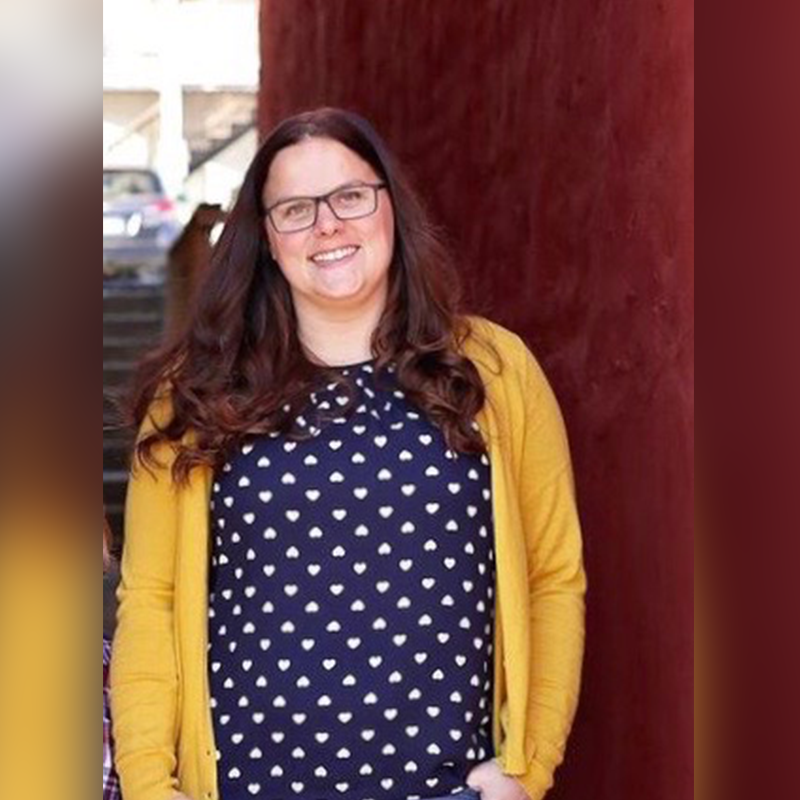
Interviewee Name: Sarah Smith, Fairfax, VA
Interviewer: Kate Muse, Reston, VA
Date of Interview: October 13, 2020, via Zoom
Subject: Single mother working full-time during the COVID-19 pandemic
Kate Muse: My name is Kate Muse. K-A-T-E M-U-S-E. And I am located in Reston, Virginia. Where are you located?
Sarah Smith: Hi, I am Sarah Smith. S-A-R-A-H S-M-I-T-H. And I am located in Fairfax, Virginia.
KM: Today is October 13th, 2020. Sarah, could you please give me permission to include your interview, both audio and visual formats, in the Hampshire College COVID-19 Oral History Archive?
SS: Yes, you may.
KM: Thank you. What year were you born, Sarah?
SS: I was born in 1981.
KM: What is your marital status?
SS: I am single.
KM: Do you have any children? And if so, how old are they?
SS: I have on child, who is ten, and then I currently also have custody of my nineteen-year old niece.
KM: For your son, do you share custody with your son’s father?
SS: I do share custody with my son’s father. We share custody fifty-fifty. So he spends equal amount of time at my house as he does his father’s house.
KM: What is your occupation?
SS: I work for the United States Government. I run an analytics and database team for the Postal Service, Office of Inspector General.
KM: And how many years have you been working there?
SS: I’ve been at the OIG for about five and a half years in a couple of different roles. I’ve run their analytics department, their computer crimes group, and now I run all of their data.
KM: What was the effect the pandemic had on your day to day work life?
SS: That’s a hard one! Haha. At our agency, prior to the pandemic, we were able to telework from home two days a week. So we were already working some from home, but we were all required to come into the office on the same days for project meetings or just so that you had that interactivity within your own team. So the last time we were in the office was March 16th. That was the last day that we, as an agency, had to report into the office, so everyone’s been working from home 100% at this point. So we are considered 100% telework. I think some of the impacts obviously from COVID, is—our agency has law enforcement agents that go out into the field and still perform interviews on suspects, so just being able to take a lot of those projects that were critical for them to be successful at their jobs and make them a number one priority, has been kind of on the forefront for us. We perform analytics on who in the postal service has been diagnosed with COVID or someone in that office so that we’re able to alert our agents to not go into those offices to try to keep them safe and healthy.
KM: So I know you were working two days remotely before the pandemic, but what was it like to switch to fully remote work?
SS: I feel like—it’s funny, looking at my calendar I will tell you that I am busier now that we are home all the time. My time seems to not be mine any longer, to control. What I mean by that is, when you’re in the office, I could pop out of my office and go see one of my employees and just ask them a five second question. Well now, you have to have some intentional conversation or intentionally scheduled meeting to review projects with them. So my meetings and my calendar are a lot fuller. I’m working more than eight hours a day now.
It just may be spaced out in different increments as people are trying to balance things. For myself, for example with my son, I’m fine to work in the morning up until 11:30am and then he has an hour and a half break in the middle of the day so I try to take an hour and a half break in the middle of the day to be able to have lunch and hang out with him and just make sure that he’s caught up on things before I send him back to do more school and then I work. So my days, instead of being eight hour long days in the office, they start to feel like 12 or 13 hour long days in the office
KM: Another question on that is: did you feel that your employer was prepared to support a workforce working remotely?
SS: Well, I feel like we were. Just because we were already working from home a portion of the time. So everyone in our agency, we already had VPN connections and laptops and the ability to remote desktop in to any type of machine that we needed to because we were already doing it one or two days a week now it’s just full-time. So one of the things that we as an agency did, was beef up some of our infrastructure for internet and some other things so that we could handle instead of 300-400 people working from home every day we now can cover the whole agency of 1500 every day.
KM: I know you’ve had a pretty steady employment, but did you experience any financial impact due to the pandemic?
SS: I don’t know that I would say I’ve considered I suffered any financial impact from it. I think it’s more just a—my son doesn’t eat lunch at school anymore so now I’m buying more things at the grocery store and I’m cooking more and who knew that a ten year old could eat that much food! So from that point, yes I’m spending more money, but it’s not necessarily—I guess it probably evens itself out based on what we were putting on his lunch account to eat lunch at school versus what we’re spending at a grocery store. It’s just reallocating some of the money that you were spending in a different way.
KM: We’re going to switch topics now to more about parenting during a pandemic. How has the COVID quarantine restrictions impacted your custody agreement?
SS: I don’t know that it has impacted it a ton. I think that what we have been doing is—we communicate a lot more just to make sure that what we’re doing in one home is equal or in respect to the other home. My son’s father’s mother—so my son’s grandmother—lives with them. Because they’re a multi-generational family, they’re trying to be a little more secluded and a little more restricted on what they’re doing and who they’re interacting with. Whereas in my home, it’s me and the two kids, so we’re a little more open. I think for that part, it’s just more communication, more shuffling, but not necessarily a change in the custody agreement. Over the summer, since we weren’t really taking summer vacations per se, it’s just kind of switching up: “Hey I want to have him to go do this activity, is that okay?” It was just more communicating on what your needs are and what you want to do with the kid to make sure that he was getting some fun and experiencing other things besides just staying at home all the time.
KM: How did you and your son’s father ensure the safety of your child as well as yourselves given that your son was moving between houses?
SS: I think I touched a little bit on that in the previous answer, but I think the big part of it is respecting each other’s wishes and just communicating. One of the things we did, was we as a family, went to another family member’s lake house. We could still do a vacation, but it’s just more kind of in a closed bubble. So you’re making sure that the people you’re communicating with and the people that you’re spending time with you know that they’re also taking the same precautions that you’re taking or you’re making sure that it’s a risk that you’re willing to take. For example, my son’s birthday was during COVID. It’s the first year we’ve never done a birthday party for him because I didn’t feel like that was a healthy thing to do knowing that we were going to open it up to ten of his friends to come do something. But we don’t know what those ten families were doing. So instead, we chose to allow one of his best friends into our bubble and that’s kind of … where we spend a good amount of time with him and played and let the kids have lunch together and play hoops and go to the pool and really just let them play. And so, now that family is in our bubble and so anytime my son wants a playdate or wants to go do something, that family is the first family that we ask for to see if they can do something.
KM: What happened with your son’s school at the end of March? Did it stay open or close on that day that everything closed down?
SS: Their school closed mid-March. And originally it was just going to be for a two week closure, so they could try to figure out what to do. And then, that two weeks turned into two weeks plus a long spring break and then they attempted to do virtual learning. But we had some infrastructure problems within our school county, so the county here wasn’t able to really do virtual learning for a couple more weeks after that. So by the time we actually started to do virtual learning, it was May 1st. At that point you had six weeks of kids having no school and our school district told our kids that “Everything was optional for the end of the year.” So trying to convince a child that an assignment is optional and he should still do it was a lot of fun, haha.
KM: How did that closure affect your son?
SS: I think it was hard because it was abrupt and they were not planning on not being able to see their friends. I also think back in March, everyone really went into shutdown so we weren’t engaging, we weren’t doing anything. So what we did was we scheduled video game time with his friends. So all the parents would say “Hey, do the kids want to get on at 7 tonight?” And they all have microphones and can talk to each other. Because at that age, my son doesn’t have a phone. Some of his friends don’t have ways to communicate without going through the parents. We would schedule video game time for him to be able to spend time with his friends. I actually just hosted two of his school friends on a playdate this weekend and it’s the first time that they have physically seen each other since March. I think it was hard because they see each other—like we’re doing right now; I can see you on a camera, but it’s not necessarily the same for a ten-year old to engage via video chat. It’s a lot different when they’re actually here in person. Six months in and it’s the first time he’s seen his two best friends from school. So I think it’s hard for him because I think he also doesn’t know how to articulate what he needs or what he wants or how he’s feeling some of the time. I don’t know if it’s a ten-year old thing or if it’s a boy thing, but I think just being able to spend time with his friends, talking to his friends, doing some of the other engagement activities that we’re doing, I think that has helped him.
KM: Now that it’s a different school year, how is your son’s school currently operating around the pandemic? Are they remote or in-person? or is it hybrid?
SS: So right now we’re 100% remote. We were asked to make a selection back in July what your family would want to do for the school year and our options were a hybrid situation where you were in person two days a week or remote 100%. We chose to do 100% remote learning because of my son’s grandmother. So, we’re 100% remote. We will be 100% remote for the entire school year that was the commitment that the county asked us to make was a year selection so we’re remote and so far, things seem to be going really well. I think it’s vastly increased and improved since the spring he has class from 8:45 in the morning until 3:30 with a few minutes of screen break in the morning and then that hour and a half lunch and then another 10 or 15 minute screen break in the afternoon. But they’re doing all your core classes, they’re doing art, and P.E, and music, and everything remote. So it’s pretty good.
KM: I know you said it was going well, but could you touch a little more on how he’s adapting school online?
SS: I think it’s hard for him to know everything to do on a computer so I think that’s part of our learning curve. He knows his way around electronics fairly well, but typing is not a skill that they teach up until now so he’s definitely doing the hunt and peck method, where you’re finger typing one by one. So I think that adapting is hard. He gets really frustrated when his peers and his class aren’t muting themselves so it’s hard to hear the teachers and things like that. So I think some of the peers and the learning curve part of it. I think is more frustrating to him than listening to his teachers online instead of listening to his teachers in class.
I will say I think he actually enjoys it a little bit better because he has some flexibility. And by that, I mean when you’re in a school building, you’re expected to sit at your desk in your chair, not really moving around, not fidgeting. My kid has a turning chair where he sits there and spins the whole time on a chair or he’s on the ground—on the floor with his laptop down there or he’s sitting in a bean bag chair. So he has that flexibility that when he gets bored or needs to fidget he can. So it helps him pay attention a little bit better because he has some of that flexibility. From that perspective; I think it has actually been pretty beneficial for him to be able to do learning that way.
KM: I know you spoke on having that playtime for your son by inserting people into your personal bubble, but I want to talk more about it. So how did you help him get opportunities for playtime from the beginning of the pandemic and still now?
SS: I think one of the benefits that we’ve had is—he plays travel soccer and throughout the entire pandemic, travel soccer has continued. It has just continued in a variety of ways. For the first couple of months, we had soccer practice via zoom. I would set up my computer out in the backyard where his coach could see him and his teammates would all be on zoom with him. And they would be able to talk for a little bit and then would do some soccer practice. So that was one of the outlets in the very beginning that was helpful because it allowed him to still be able to see and talk to his friends and still do something to make it kind of be normal.
So we did that. Like I said, we did the video game sessions with his friends. At his father’s house, we immediately—the next door neighbors is kind of the people that he would always play with, so we immediately let them in the bubble, so that at least he had some kids to play with and interact with. So we still do travel soccer to today. They wear masks during all of their games and the kids are spaced six feet apart on the sidelines so it’s not an enjoyable soccer game where you can run around free—you have a mask on your face while you’re trying to play. But it’s a great outlet for him because it’s getting him to burn some energy, he’s getting to see his friends and play and talk and hang out with them. It’s the most normal thing that we’ve been able to do throughout the pandemic for him.
KM: Since the quarantine and the pandemic in March, are there any routines that you have now since COVID that you think will stick with you, post-pandemic?
SS: Grocery store pickup, yesss! It’s one of those things that I have never really thought of investing to do—to pre-shop and make my grocery list and not have to go spend time in the grocery store. I don’t think I stepped foot in a grocery store from March until almost June or July. I would just shop online and my grocery store—I could pull up and say “Hi, I’m here!” and they would load it into the back of my car for me and I could go home with groceries. It’s something that I’ve kept doing with everything. I think that’s awesome. The other thing that I’ve been doing, and it’s just me, we don’t eat out a ton, but when I do go out or something, it’s one of the things that I’ve always tried to do, but now even more so is—the service industry took a huge hit from the pandemic and all of that, so I’m trying to do as much as I can to pay back to that industry. So anytime we go out to eat, if it’s a sit-down restaurant, I always try to make sure that I’m giving them a substantial tip to try and help them get back on their feet. Because I know that this was something that no one planed for and if there’s a way to try to help that industry, then I’d like to do that. So that’s the other thing.
KM: So we’ve talked about a lot of things now and I’m curious if there’s anything you want to add or if you wanted to dive deeper into anything we’ve just skimmed over?
SS: I think the only thing that I would add is just … I think this is something that none of us were prepared for and everyone has kind of adapted to their own way within the pandemic. I think the one thing that I have noticed throughout the pandemic is I wish people would start to just accept people for people. Everyone has their own opinion on this, everyone has their own way that they’re dealing and handling with it. I wear a mask when I go in public because I feel that that’s the best option. I also think people SHOULD wear a mask when they go into other store even if they don’t agree with it, because it is the respectful thing to do for other people. And just to put others before yourself when you’re thinking about things like this. Just because “you think it’s okay” — that’s great, that’s your opinion and I’m not telling you have to change your opinion. But if someone asks you to do something for their safety, then put others first and just kind of think about things. So that would be the only other thing that I would add.
KM: Great! Well, thank you for this interview. I’m going to stop recording, but you can sit back for a minute and I’ll speak to you.