
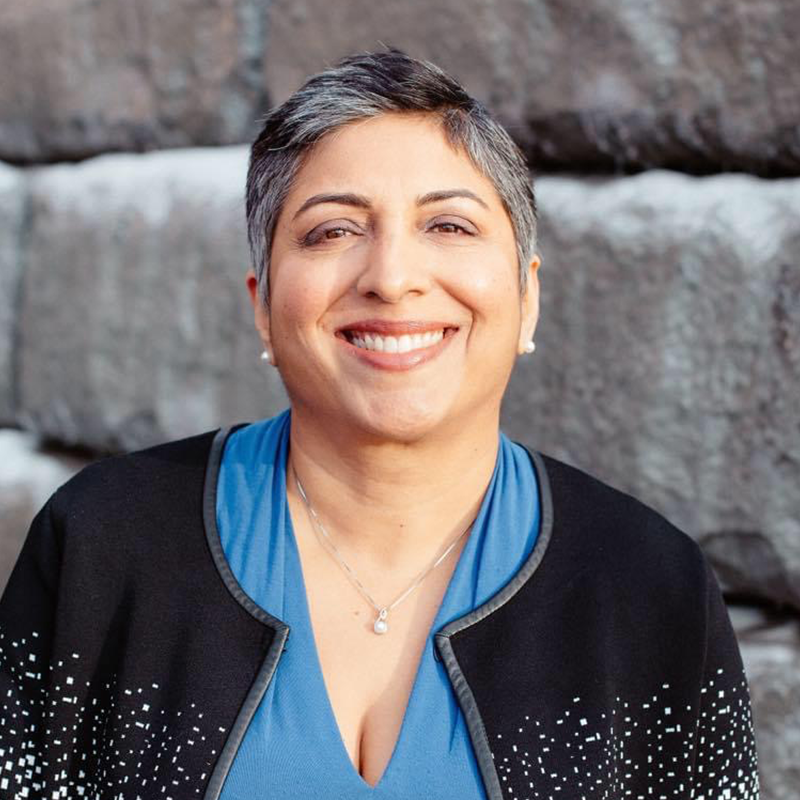
Interviewee: Esha Gangolli, Acton, MA
Interviewer: Riley Callison, Amherst, MA
Date: October 17, 2020, Via Zoom
Topic: Biomedical Research during COVID/Family Life
Riley Callison: This is Riley Callison, today is Saturday, October 17th, 2020. I am interviewing Esha- Could you please spell out your full name?
Esha Gangolli: First name is Esha, E-s-h-a. Last name Gangolli, G-a-n-g-o-l-l-i.
RC: For the Hampshire College COVID-19 Oral History Archive. This interview is taking place over Zoom, and the interview is sponsored by Hampshire College and is part of the first-year seminar, Pandemics.
RC: So where are you located right now?
EG: I’m in Acton, Massachusetts.
RC: And I normally would be located in Hampshire College, Amherst, Mass. Could I please have permission to record your words and deposit the interview into the Hampshire College COVID-19 Oral History Archive?
EG: Sure.
RC: Alright, thank you, and thank you for accepting this interview. We just have a few biographical questions to cover. What year were you born?
EG: 1968.
RC: What is your current occupation?
EG: I’m a clinical researcher.
RC: And how many years have you been in your occupation?
EG: Twenty years.
RC: Alright, now we can start the actual questions I have, that aren’t mandatory. Can you tell me a bit about your educational background?
Esha: Sure, so I did my Bachelor’s in microbiology, followed by a Master’s, majoring in biotechnology. And I came to the US to do a PhD in cell and molecular biology.
RC: Do you have any children, how many, and what are their ages?
EG: I do have two children, and they are 16 and 20, respectively.
RC: Alright, and are they currently at home, learning online?
EG: They are.
RC: How has it been balancing the work responsibilities with childcare during this pandemic?
EG: Well, I think fortunately, my children are quite independent, so I have not had to do a whole lot, other than what I normally do. Except that I have been cooking and cleaning a lot more often. So that has been challenging. But probably the most difficult aspect of this period has been the fact that our home is not really geared up to have four people all on Zoom conferences at the same time (laughs), so there aren’t enough private spaces to sustain that.
RC: (Long gap.) Following up on that, how has having your kids at learning at home impacted your work life, or has it?
EG: I think it’s impacted it minimally. Only in that my workspace is sometimes co-opted by one of my children. (Laughs.) If they need more private space to be on a call or really do some focused work, my office gets utilized, but other than that I’d say the impact has been pretty minimal. There has been a more obvious blending of family and work time, I think, so that’s really been the most obvious impact that I can identify.
RC: What has been your philosophy about social distancing and masks in helping curb the spread of the virus?
EG: Well, I’m a scientist, and having majored in microbiology for my Bachelors, I’m very attuned to what it takes to really retard a pandemic like this in its spread. And so, I have to say, I’ve been extremely careful, particularly because we have a high-risk individual in the family. So for the first several months, none of us really ventured out at all, other than to do grocery shopping, and we minimized that to once every couple of weeks, so we were very regimented about that. We developed a meal plan, based on which we developed a grocery list, and we basically went and shopped for exactly what we needed for two weeks. We were out for maybe two or three hours every fortnight. That was it. Obviously with masks on and social distancing and all of that. But it wasn’t until maybe September that I actually saw anybody outside my family in a socially distanced way, other than very casually from across the street, I’m not talking about that. But like a planned social event, that was socially distanced and outdoors, we didn’t actually engage in any of that until September. And my guess is we’re not going to engage in that after October either because things are spiking again, so.
RC: That is understandable. Has COVID affected your ability to do research at all?
EG: It has a little bit. We definitely did see an impact. So what I do is I run clinical trials for cancer drugs. And I know across the board and certainly, for my trials, we’ve seen a substantial drop in enrollment of new patients into the clinical trials as well as the reluctance of existing patients to come into hospitals to get their follow up treatments. So we definitely did have a considerable dip in trial enrollment over the summer. But it’s heartening to note that it’s recovering pretty well right now. I think the biggest concern for me is that individuals who are substantially at risk because they are receiving treatment for cancer are also at risk for COVID when they go into the hospitals, and it’s a difficult tradeoff. It’s already a proven statistic that there have been many fewer cases of breast cancer for example diagnosed this year than there were last year, and it’s not because cancer has disappeared it’s because women aren’t going for their checkups as often as they should, or doing their yearly mammograms like they should. So, that’s the impact that it’s having technically.
RC: Has collaboration with coworkers been affected at all?
EG: To some extent, I would say, yes. Fortunately, not terribly. That’s because I have been working remotely anyway for a company that’s got locations in California and Colorado. So, I would only go and visit my colleagues once a month. So, I think in doing that though, I built up enough relationships that I was already working remotely for three weeks out of each month before the pandemic hit. So, it wasn’t a huge shift in the energy of the teamwork so to speak. I think what has changed is that it’s difficult not to have those in-person interactions which I think cement a lot of the collaborative work. And for sure, it has impacted the more grade stopping kind of activities that we do that I think only work well in person. I think it is difficult to recreate that energy and that synergy on a video environment.
RC: You mentioned that your company has locations in California and Colorado. Did you need to travel there?
EG: Yes, so I would travel there one week out of the month to be present in person at one of those locations.
RC: How has COVID made the traveling?
EG: It’s dead in the water. I have not traveled since February 2020. I am unlikely to resume that travel unless we have a proven vaccine. I am not going to jump on a plane until I know that the vaccines that are out there are actually really effective. Because there is really good research that exposure to close proximity to effective individuals on a plane is a very effective mode of transmission. I’m very driven by the data. I’m not going to be convinced otherwise easily.
RC: That makes perfect sense. You mentioned that you work remotely most of the time. What impact has the inability to travel had?
EG: I think overall for the company it’s not been too terribly bad. I mean obviously, there are in-person interactions that are more important than others. For me, I don’t think it has personally affected me that terribly. It’s definitely saved the company a ton of money. We also have a location in Europe and there were people traveling quite often between locations And also a significant chunk of change was spent traveling to conferences which is the lifeblood of what we do. And so all of that travel, the really expensive registration fees of the conferences, all of that has been saved that year since everything has moved to a virtual model.
RC: Has COVID affected morale at all?
EG: I would say, definitely. We’ve had colleagues that have contracted Covid. We’ve had a lot of other things. I think people are finding it difficult to cope with the other things in their life with Covid added on to it. If it were just Covid in and of itself, it would be one thing. To give you an example, several of my colleagues on the west coast have been affected by the wildfires, quite substantially. But, there is no place else to go. You have to be holed up in your house. You can’t really travel a whole lot. There’s no way to escape to any place. You can’t go into a coffee shop and spend 20 minutes and forget about what’s going on. Those interactions, even though they are minor, sometimes play a very major effect on people’s mental health. I know that some of my colleagues have taken mental health days off. That’s perfectly understandable.
RC: Has Covid affected you personally?
EG: Well, so, I’ve had a couple people I knew die of COVID. I’ve had many people I know get infected by Covid, including my brother. That’s been very difficult. Fortunately, for me, for him, he recovered relatively quickly. But it was scary. And just having other folks that I know, and their families’ be personally affected by this disease, knowing what it can do, I think is quite sobering. I think it has justified my caution that I exhibited from the start, but it hasn’t made me any less wary of what threat it poses.
RC: Is there anything that has been said that you feel needs to have more elaboration? Is there anything that has not been said that you feel is important to bring up for the sake of the interview?
EG: Not really, I think the only thing I would say is that I am frustrated that more people are not taking this more seriously. We would not be in this position, certainly in our country, but also in the world had people been considerate of other people and taken appropriate precautions. As someone who’s sort of steeped in infectious disease and in cancer, I’m frustrated not just for myself and my family but for the world at large. I think this was a perfectly preventative thing. It certainly could be retarded in its tracks very easily if everybody committed to it?
RC: What are your opinions about how this has been handled and what could have been done better?
EG: What could not have been done better, is the more germane question I think. I think it’s been mishandled from the very beginning. Just reading the news in January and February. If I was sounding the alarm then. There’s no reason why people in the administration should not have realized the enormity of what was going to come, what needs to be prepared for it. And certainly, once we knew how bad it was from the reports in other countries, there was no reason to act like it was hunky-dory and it wasn’t something that was serious. Clearly, that is something that has cost us hundreds of thousands of lives, it’s impacted millions of people’s health in a fairly chronic way. It’s not just a shame, it’s really quite criminal in my opinion. There still could be so much done which is not being done. So, the concerted effort to suppress the scientific valid information, the suppression of scientists who are speaking out. The inability or unwillingness to generate infrastructure in the places that need it or to move testing equipment or testing supplies to places that need it the most.
As somebody who deals in facts and common sense, none of this is rational to me. It does not make sense why a nation would want to deliberately expose its people to a potentially fatal but certainly serious pandemic that would seriously compromise its population cell. I can’t think of one thing that has been done right to be honest. I applaud a couple of scientists, I will specifically [?] Dr. Fauci on this, who have been unwavering on their insistence on being factual, on relaying scientifically sound facts, on relying on data rather than conjecture, and all of that gives me some hope to think that there is a small window in which we may be able to effect some change but that window is fast closing.
RC: That is all of the questions that I have. Thank you for agreeing to have this interview with me.